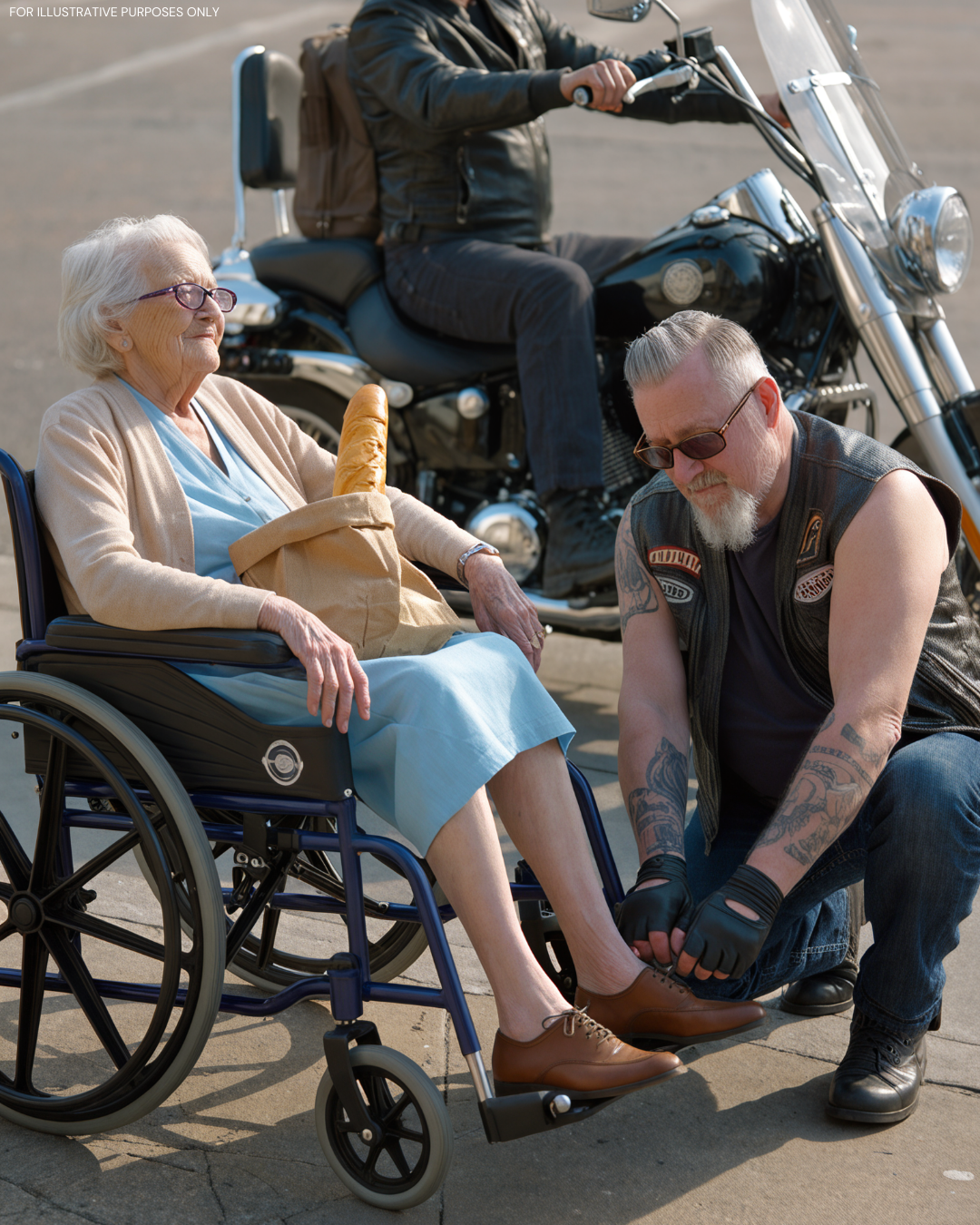
“Madame,” he said softly, “you’ve shouldered enough. Let us carry the rest.”
People walking by slowed down to watch. A few smiled. Others looked unsettled. As for me, my chest tightened until I could barely speak. For the first time in years, I felt seen.
He looked up at me with calm seriousness. “You don’t need to do this alone anymore. You have us.”
Not long before that day, my kitchen had been a wasteland. A half-empty jar of mustard, a pat of butter, two stale crackers. It was a Thursday evening in Lyon, the streets outside echoing with chatter I was no longer part of.
I called my son and asked if he could stop by with some bread and eggs. Nothing extravagant, nothing expensive. He sighed, his voice heavy with irritation. “Mother, I’m working late. You’ll manage, won’t you?”
So I managed. I boiled water, softened the crackers, and told myself it was enough. But in the quiet, it wasn’t.
The canteen
The next morning, I forced my swollen legs down the boulevard until I reached a soup kitchen tucked behind an old church. The room smelled of broth and damp coats. Dozens of people huddled at the tables, their eyes glazed from fatigue, their voices hushed.