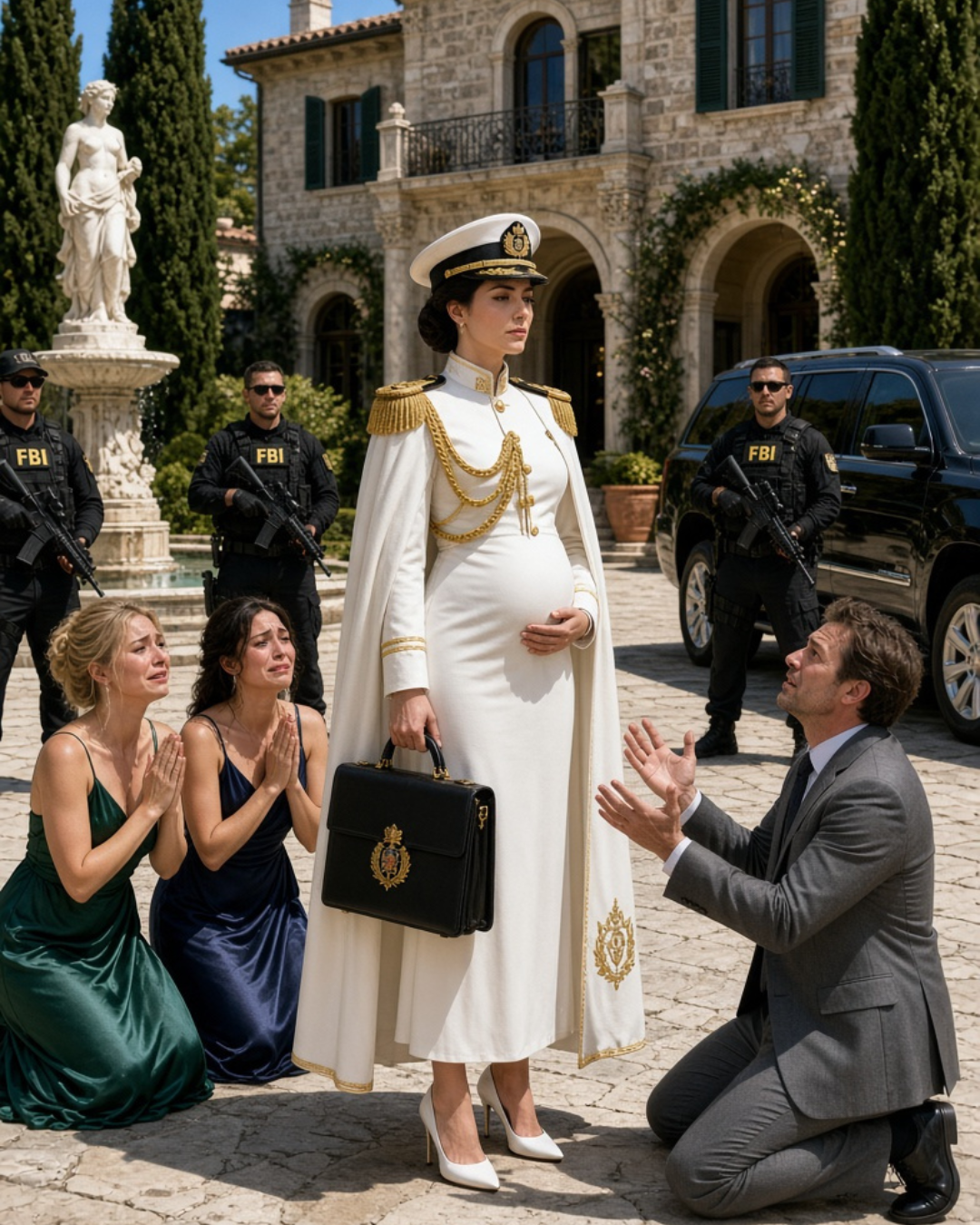
PART 1: The Golden Cage
I was thirty years old, twenty-eight weeks pregnant, and serving as an active-duty Colonel in the United States Army Military Intelligence Corps.
My husband, Ryan, knew I was in the military. So did his relatives. But none of them understood the nature of my work.
In their minds, I spent my days handling dull administrative duties at a nearby base, sorting documents while preparing to become a mother.
His sister, Melissa, was particularly dismissive. She regarded me as an excessively paid secretary who believed herself too important to attend the family’s weekend gatherings.
They knew equally little about my father.
As far as they were concerned, he was simply a man who had spent his career in the armed forces.
They had no idea that General Robert Bennett commanded the respect associated with four stars.
And I had deliberately kept it that way.
Maintaining a boundary between my military responsibilities and my husband’s family had always seemed safer.
Only later did I recognize how many warnings I had overlooked.
The evidence of what was being planned against me had been hidden in ordinary conversations and seemingly harmless habits.
Ryan had always shown an unusual interest in the reinforced steel safe inside our master bedroom.
“It’s just so bulky, Claire,” he’d casually mention over breakfast, his eyes lingering on the keypad. “And the security on this apartment building is a nightmare. Do we really need military-grade encryption on our home Wi-Fi? By the way, I need to find those old tax documents for the accountant. Can I just borrow your security key for five minutes?”
I always deflected.
“Taxes are in the filing cabinet, Ryan. The safe is just for classified DoD hard drives. Protocol.”
He would respond with an affectionate smile, kiss my forehead, and move on to another subject.
Ryan had perfected the appearance of a loving husband.
He knew exactly how to sound concerned, attentive, and protective.
And throughout the previous three months, I had desperately needed that support.
As my pregnancy progressed, my health had deteriorated in ways I couldn’t explain.
Exhaustion overwhelmed me even after a full night’s sleep.
During tactical briefings, my thoughts became sluggish, and concentrating on familiar information required enormous effort.
Waves of nausea struck without warning, far more severe than anything I associated with ordinary pregnancy symptoms.
Ryan seemed to have an answer.
Every night at precisely nine, he prepared a steaming mug of herbal tea.
“It’s an old family recipe,” he’d say softly, his warm hands wrapping around mine as he passed the ceramic mug. “Chamomile, ginger, and a few organic supplements my mother swears by. Drink it all, Claire. You and the baby need your strength.”
And I drank it.
Night after night.
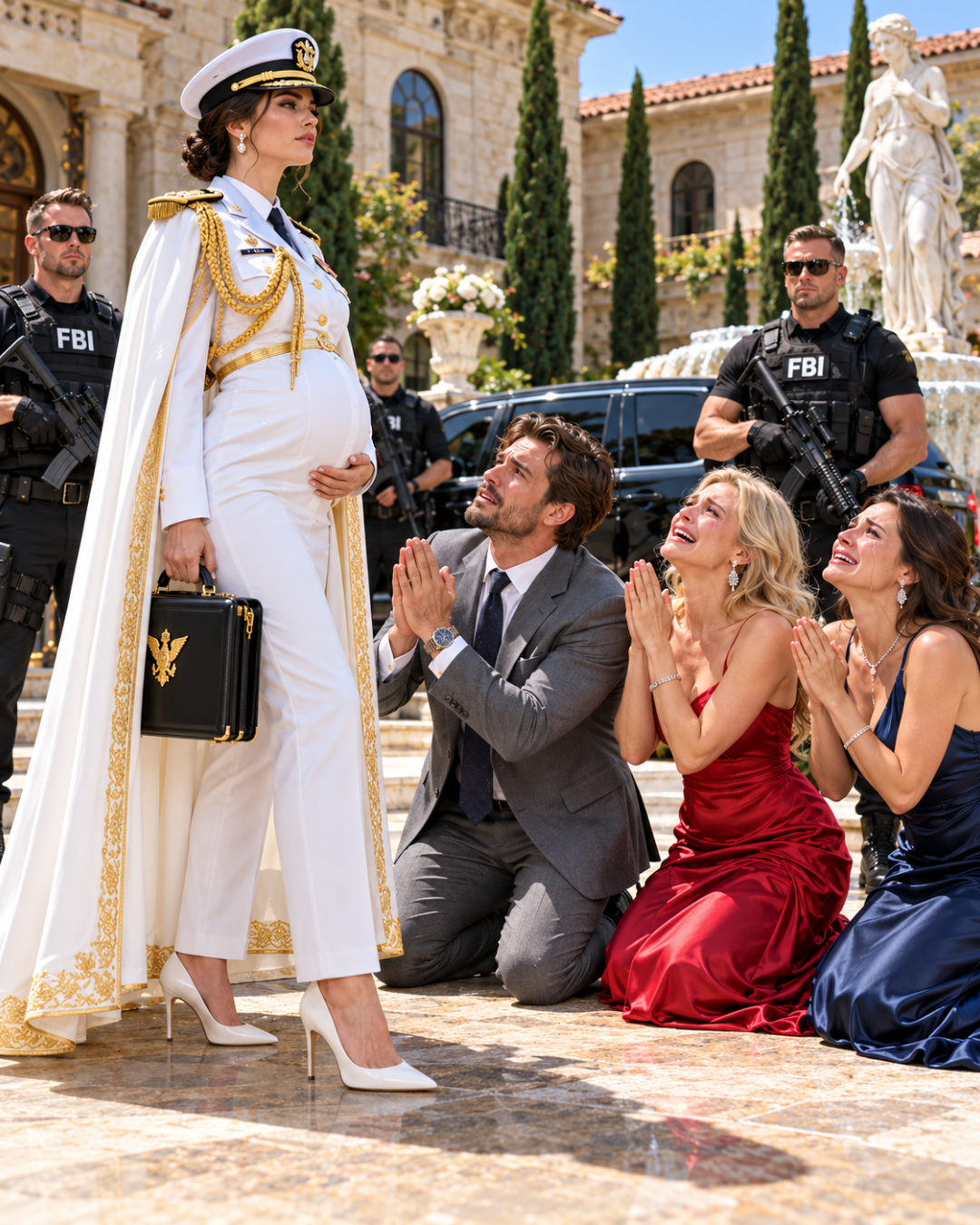
I trusted the man who handed it to me.
I never imagined that his carefully rehearsed tenderness concealed something monstrous.
Then Thanksgiving arrived.
Because Ryan’s parents were renovating their kitchen, the entire Miller family came to our apartment for dinner.
Although I was seven months pregnant and struggling with persistent back pain, I spent much of the day preparing the meal.
I basted the turkey, chopped vegetables, arranged serving dishes, and remained on my swollen feet far longer than I should have.
Melissa occupied a stool at the kitchen island, enjoying a mimosa while offering one insulting observation after another.
Whenever I paused to rest, she accused me of “milking the pregnancy.”
When I asked Ryan to carry a heavy roasting pan, she claimed I was “being dramatic.”
Ryan never defended me.
Instead, he followed me into the pantry, gently rubbed my shoulders, and whispered his usual excuse.
“That’s just Melissa,” Ryan whispered to me in the pantry, rubbing my shoulders. “Just ignore her, honey. Keep the peace.”
I had heard those words so often that I barely reacted anymore.
After dinner, the apartment became unbearably warm from the cooking and the number of guests.
We had placed several bottles of sparkling cider outside on the balcony to keep them cold in the November weather.
I stepped outside to retrieve them.
I was wearing only a lightweight maternity sweater.
The instant I crossed the threshold, the sliding glass door slammed behind me.
Click.
The unmistakable sound of the lock engaging cut through the freezing air.
I spun around with a heavy bottle in each hand.
Melissa stood inside, staring through the glass.
“Open the door, Mel,” I said, my voice muffled by the thick double-paned glass.
She didn’t grin.
She didn’t laugh.
Nothing about her expression suggested a harmless prank.
Instead, she lifted her phone to her ear.
I couldn’t hear her clearly through the insulated glass, but years of intelligence work had trained me to recognize spoken words from the movement of someone’s lips.
“It’s done,” Melissa mouthed into the phone. “She’s outside.”
My heartbeat stumbled.
Who was receiving that message?
Melissa lowered her phone and faced me.
Her next words barely carried through the glass.
“Maybe a little suffering will toughen you up.”
Then she walked away.
She disappeared into the warm living room as though she had done nothing more serious than close a window.
“Melissa!”
I dropped the cider bottles.
They smashed against the concrete, spilling liquid that began freezing almost immediately.
A brutal wind swept across the balcony.
The cold penetrated my thin sweater within seconds.
I struck the glass with both fists.
“Hey! Open the door! I’m pregnant!”
Then I remembered the emergency backup handle I had installed on the outside of the sliding-door frame.
It was one of the security precautions I routinely maintained in every residence.
I reached toward its usual position.
My fingers closed around nothing.
I looked down.
The handle wasn’t broken.
It hadn’t simply come loose.
Someone had unscrewed it.
The mounting holes were empty and clean.
The realization was immediate and terrifying.
This hadn’t been a spontaneous act of cruelty.
Someone had prepared the balcony in advance.
The temperature was in the low twenties.
Within minutes, feeling began disappearing from my fingertips.
I hammered the glass, shouted Ryan’s name, and begged anyone inside to notice me.
But the Thanksgiving football game blared from the television.
Nobody came.
Then a sharp cramp seized my abdomen.
I gasped.
A second contraction followed, even more painful than the first.
Both hands flew to my stomach.
My breath emerged in thick white clouds.
“Please,” I gasped, my legs buckling. “Please, not my baby.”
I couldn’t tell whether I was pleading with my unborn daughter to survive or begging the people inside my home to show compassion.
My knees weakened.
The buildings beyond the balcony blurred.
Darkness crept inward from the edges of my vision.
I collapsed against the sliding door, pressing my cheek to the freezing glass.
Pain tore through my abdomen.
And then everything disappeared.
The Four-Star Intervention
When consciousness finally returned, the wind was gone.
Instead of the balcony, I was surrounded by harsh fluorescent lighting and the sterile smell of a hospital.
A fetal monitor sounded beside me.
Beep.
Beep.
Beep.
I tried lifting my arms, but they felt impossibly heavy.
Through half-open eyes, I saw Ryan standing at the foot of my bed.
He wasn’t watching me.
He was confronting an exhausted emergency-room doctor.
“I am her husband, and I am telling you, we are transferring her to Mercy Valley Private Clinic right now,” Ryan demanded, his voice tight with an urgency that felt entirely wrong. “I have a private ambulance waiting downstairs.”
The doctor refused.
“Mr. Miller, absolutely not,” the doctor shot back, holding her clipboard like a shield. “Your wife’s core temperature dropped to severe hypothermic levels. She is experiencing placental abruption. Moving her would be catastrophic. We are prepping an OR—”
Ryan interrupted her.
“Mercy Valley has better specialists!” Ryan interrupted, stepping closer to the doctor, an aggressive edge to his posture I had never seen before. “Sign the AMA release forms. We are leaving.”
Mercy Valley.
Even through the fog surrounding my thoughts, I recognized the name.
Mercy Valley Private Clinic was no ordinary hospital.
It was an exclusive medical facility with substantial financial backing from Blackwood Defense.
And Blackwood Defense was the military contractor my intelligence unit had been investigating for treason.
Suddenly, Ryan’s desperation to transfer me made horrifying sense.
He wasn’t trying to secure better medical care.
He was attempting to isolate me.
“No,” I croaked.
The word was barely audible.
But Ryan heard it.
He turned so quickly that his expression changed before he could conceal his alarm.
“Claire! Oh, thank God, babe, you’re awake.”
He hurried toward me and reached for my hand.
I pulled away.
The memory of Melissa speaking into her phone returned with devastating clarity.
“It’s done.”
“She’s outside.”
I knew now who she had been talking to.
Before Ryan could speak again, voices rose in the corridor.
“Sir, you can’t go in there—” a nurse protested.
A familiar voice answered.
“Watch me.”
The hospital door was pushed open with force.
Two military police officers entered first and secured the entrance.
Ryan stepped backward.
Then my father appeared.
General Robert Bennett stood in his full dress uniform.
The decorations on his chest represented three decades of military service and command.
Four silver stars gleamed beneath the hospital lights.
He looked neither confused nor panicked.
His expression carried a cold fury that made the entire room fall silent.
Behind him, two local police officers escorted Susan, Ryan’s mother, and Melissa.
Melissa looked physically ill.
Dad ignored them.
He came directly to my bedside and enclosed my trembling hand in his.
“My granddaughter?” he asked the doctor, his voice vibrating with command.
The doctor answered immediately.
“Fetal heart rate is dropping, General,” the doctor replied, standing up straighter. “We need to perform an emergency C-section immediately.”
Dad’s response was thunderous.
“Then what are you waiting for?”
Susan finally found her voice.
“Who… who are you people? Why are there soldiers in here? Ryan, what is going on?”
My father slowly turned toward her.
“I am General Robert Bennett. And the woman your daughter locked outside to freeze to death is an active-duty Colonel in the United States Army.”
The room became utterly silent.
Melissa suddenly began whining.
“It was only a joke! I didn’t know she was a Colonel! She doesn’t even look like a soldier!”
I forced myself to rise slightly despite the agonizing pain.
“What does my rank have to do with it, Melissa?” I rasped, my voice dripping with venom. “If I worked in a grocery store, would locking a pregnant woman outside in sub-zero temperatures be acceptable?”
Melissa’s face crumpled.
She looked toward Ryan for support.
But my husband was staring at the floor, sweat shining across his forehead.
Dad turned toward the military police.
“Take them out of my sight,” Dad ordered the MPs. “They are to be detained under federal jurisdiction for assault on a commissioned officer.”
Ryan lunged forward.
“Wait!” Ryan lunged forward. “Claire, tell them! Tell them it was an accident!”
Before I could respond, the emergency physician interrupted.
She was holding newly printed laboratory results.
Her expression had changed from professional concern to unmistakable alarm.
“General Bennett… Colonel. Before we move to the OR, there is something you need to see. We ran a comprehensive toxicology screen to check for fetal distress markers.”
She looked directly at me.
“Colonel, your hypothermia triggered the premature labor, but your body was already failing. The bloodwork shows dangerously high levels of Thallium and an unidentifiable synthetic metabolic disruptor.”
Dad’s hand tightened around mine.
“Poison?” Dad whispered, the word sharp as a scalpel.
The doctor confirmed it.
“Administered in small, daily doses over a period of months,” the doctor confirmed. “It’s been systematically destroying your immune system and inducing extreme fatigue.”
Small doses.
Every day.
For months.
My thoughts raced backward through the weeks.
The exhaustion.
The nausea.
The clouded concentration.
And Ryan standing in our kitchen every evening at nine o’clock, placing a warm ceramic mug in my hands.
Chamomile.
Ginger.
Organic supplements.
The family recipe his mother supposedly trusted.
I slowly turned toward him.
Ryan was retreating toward the doorway.
His eyes darted from the doctor to the military police.
The man who had pretended to protect me now looked like someone desperate to escape.
The truth was no longer hidden.
My husband had been poisoning me.
And our daughter was fighting for her life.
PART 2: The Anatomy of Betrayal
“Lock the doors!” Dad roared.
The military police moved immediately.
They seized Ryan, pinned his arms, and forced him against the wall.
He shouted in protest.
But his voice disappeared beneath the sudden alarms from the fetal monitor.
“Heart rate is plummeting! We’re losing the baby! Move, move, move!” the doctor shouted.
The nurses released the brakes on my hospital bed.
Within seconds, they were rushing me toward surgery.
As I passed through the doorway, I caught one final glimpse of my father.
He had drawn his sidearm and stood over Ryan with a terrifying expression.
Then the doors closed.
The operating room dissolved into a blur.
Bright surgical lights.
Rapid instructions.
The cold sensation of anesthesia spreading through my body.
I was terrified.
But beneath the fear, another emotion was growing.
Fury.
Ryan had used my trust, my pregnancy, and my deteriorating health as tools against me.
The man I had loved had spent months slowly destroying my body.
As the anesthesia overtook me, I wasn’t praying for peace.
I was praying for vengeance.
When I woke again, I was lying in a quiet recovery suite.
The lights were dimmed.
The room was warm.
“Claire.”
I turned toward the voice.
Dad sat beside my bed.
His dress uniform jacket hung over a nearby chair, and his sleeves were rolled up.
The faded Rangers tattoo on his arm was visible.
His eyes were red from exhaustion, but he remained alert.
“The baby?” I gasped, my hand flying to my empty stomach.
The sudden absence of my daughter struck me harder than the pain of the operation.
Dad answered immediately.
“She’s in the NICU,” Dad said instantly, his voice a soothing rumble. “Twenty-eight weeks is early, Claire. She is tiny. But she is fighting. She’s breathing with the help of a ventilator. You have a daughter, and she is a survivor. Just like you.”
A tear slipped down my face.
A daughter.
She was alive.
“Ryan,” I whispered, the name tasting like ash.
Dad’s expression hardened.
“He is in a secure federal holding room in the basement of this hospital. Military Intelligence took over the building while you were in surgery. We seized his phone, his laptop, and his bank records.”
I gritted my teeth as pain spread across my incision.
“The tea. He was putting it in the tea.”
Dad nodded grimly.
“Yes,” Dad confirmed grimly. “We dispatched a hazmat team to your apartment. They found a false bottom in his shaving kit containing liquid Thallium and a synthetic compound traced to a black-market defense lab. But Claire, it gets worse.”
He leaned closer.
“When we accessed your secure military personnel files to coordinate your medical evacuation, DoD Cyber Command flagged a massive breach attempt on your home network. While you were freezing on that balcony, someone was trying to brute-force the physical safe in your bedroom.”
My entire body went cold.
The safe.
“My Blackwood Defense dossier,” I breathed.
For eight months, I had led an intelligence investigation into Blackwood Defense.
The multibillion-dollar contractor had been secretly transferring American missile telemetry to hostile foreign organizations.
The most conclusive evidence was contained in a decrypted ledger.
Its only physical copy was stored on a secure hard drive inside my bedroom safe.
Suddenly, every piece of Ryan’s behavior aligned.
“Ryan,” I realized, the horrifying puzzle completing itself. “He needed me incapacitated. He needed a medical emergency so he could steal my security key and open the safe without me being able to stop him. He tried to force my transfer to Mercy Valley—a Blackwood hospital—to keep me locked away.”
Dad listened without interrupting.
Then he spoke quietly.
“We need you to talk to him, Claire,” Dad said gently. “He is invoking his right to silence. But he won’t stay silent for you. We need to know who his handler is, and if they got the drive.”
Ten minutes later, despite the medication and pain from surgery, I was taken in a wheelchair to the hospital’s basement holding room.
Ryan sat handcuffed to a stainless-steel table.
When he saw me, he immediately began crying.
“Claire… Claire, please,” he sobbed. “I didn’t want to hurt you. You have to believe me!”
I looked at him without sympathy.
“You poisoned my food, Ryan,” I said, my voice dead and flat. “You plotted the murder of our child. Do not insult my intelligence by claiming you didn’t mean to.”
He pulled against his restraints.
“They threatened me!” he cried, pulling at the cuffs. “Six months ago, my architecture firm went bankrupt. We were drowning in millions of dollars of debt. A man came to me. He called himself Henderson. He paid off everything, Claire. Every penny. All he wanted was the Blackwood drive. He said if I didn’t get it, they would kill us both.”
I stared at him.
“So you poisoned me?” I asked coldly.
Ryan continued pleading.
“The poison was just supposed to make you weak! Too tired to notice me snooping!” Ryan pleaded. “But you never took off the biometric key necklace. So Henderson said we needed a major medical event. Something that would put you in the ICU so I could take the key from your belongings.”
I felt sick.
“And Melissa?” I asked.
Ryan swallowed and looked away.
“She… she didn’t know about the files. I just… I started feeding her lies months ago. Telling her you thought she was white trash, telling her you wanted to cut my parents out of our lives. I wound her up. I knew she was petty enough to do something stupid if I gave her the opening. When she locked you out… I was on the phone with her. I told her to leave you there for twenty minutes to ‘teach you a lesson.’ I knew the cold would trigger a crisis with the pregnancy.”
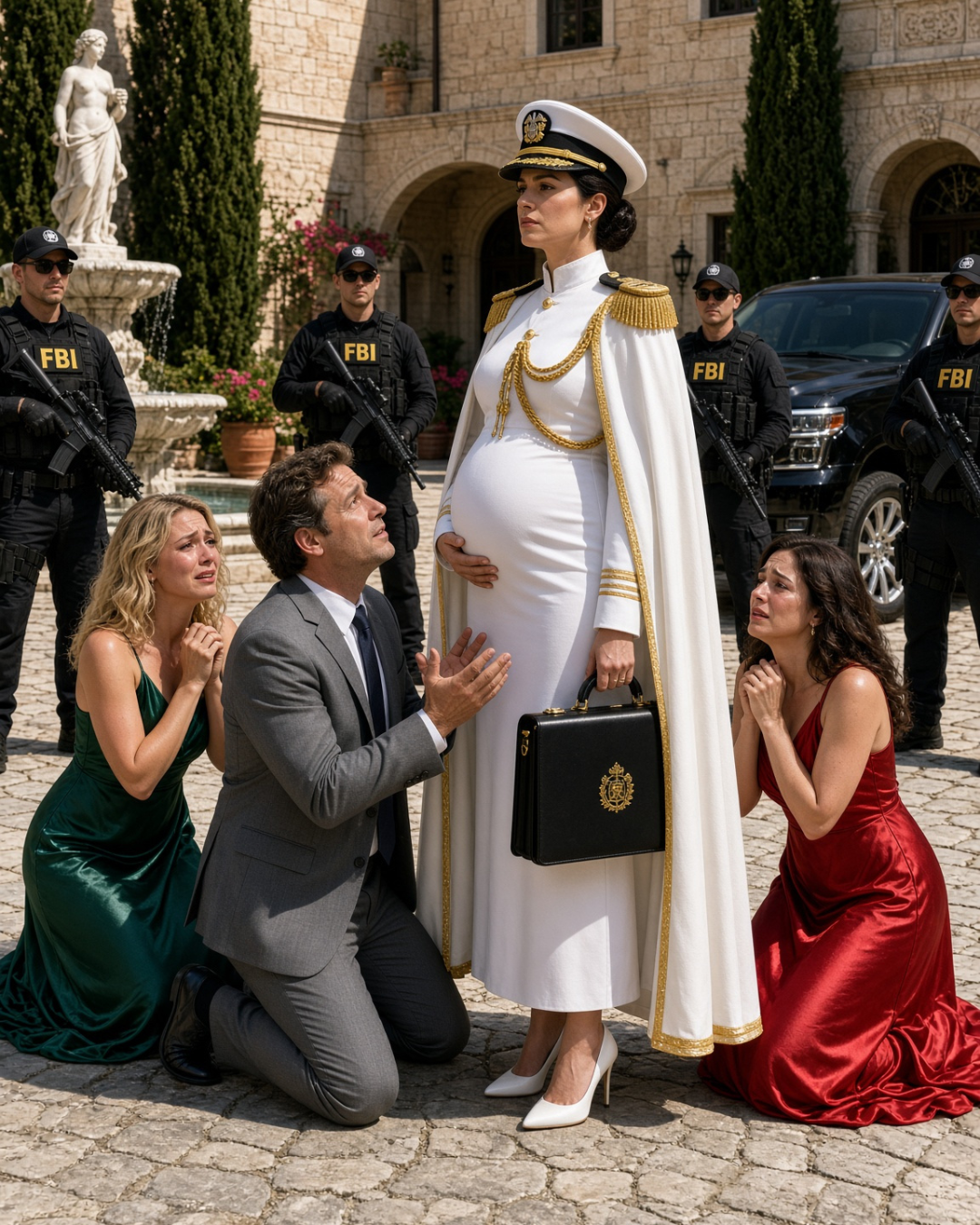
I could barely comprehend the cruelty of his confession.
He had deliberately encouraged his sister’s resentment.
He had fed her lies until she was prepared to hurt me.
Then he had used her hostility to create a medical emergency that might kill both me and our unborn child.
All so he could steal classified intelligence.
Before I could respond, Dad’s encrypted communications device sounded.
He stepped away to answer.
After listening for several seconds, he turned toward me.
His face had gone pale.
“Claire,” Dad said urgently. “Military police just raided the apartment. The safe has been blown open. The Blackwood drive is gone. And our cyber division just intercepted an encrypted text to Ryan’s phone from an unknown number.”
He raised a tablet.
The message appeared on its screen.
“Upload in progress at the extraction point. Target is neutralized. Clean up the loose ends at the hospital.”
My pulse accelerated.
Henderson had the evidence.
And he was already transmitting it.
I turned toward Ryan.
“The extraction point,” I demanded, looking at Ryan. “Where is Henderson doing the upload?”
Ryan began breathing rapidly.
“The… the abandoned parking structure behind the apartment! He has a mobile satellite uplink in his SUV. He said he needed to be within a mile of your home network to mimic your IP address and bypass the final firewall!”
The stolen drive contained some of America’s most sensitive military intelligence.
Henderson was transferring it to a foreign server.
And I was recovering from emergency surgery.
The Rain and the Firewall
Dad immediately activated his radio.
“Call Sector Four Command,” Dad barked into his radio. “I want a tactical perimeter around that parking structure. Lethal force authorized.”
I forced myself upright.
“Dad, wait!” I shouted, wincing as the stitches in my abdomen pulled. “If the tactical team breaches before the upload is finished, Henderson will trigger a dead-man’s switch. The Blackwood drive is rigged with a localized EMP. If he panics, he’ll fry the drive, and we lose the evidence forever. The only way to stop the upload safely is a manual counter-hack.”
Dad looked at me firmly.
“You are in no condition to do a manual counter-hack, Colonel,” Dad said firmly.
I pushed the hospital blanket away.
“I am the only one who knows the 24-character override cipher!” I threw the thin hospital blanket off my legs. The pain was blinding, a white-hot flare that made my vision swim, but the adrenaline masked the worst of it. “Get me a wheelchair. Get me a tactical laptop. Now.”
Dad studied me.
He could see how pale I was.
He could see the sweat gathering on my forehead.
But he also recognized the determination of an officer who understood the consequences of failure.
Finally, he nodded.
Ten minutes later, an armored military transport raced through the rain-soaked streets.
I sat secured in the rear compartment, an encrypted tactical laptop balanced across my knees.
My body trembled from pain, medication, and surgical shock.
“Two minutes out,” the driver called back.
Dad spoke through his communications equipment.
“Status on Henderson?” Dad asked over the comms.
The tactical commander responded.
“Suspect is cornered on the top level of the parking structure, General,” the tactical lead responded in our earpieces. “He is inside a black SUV. We have snipers on the adjacent roofs, but we cannot take the shot. He is holding a detonator. If his thumb slips, the EMP goes off.”
I activated my microphone.
“Hold your fire,” I said into the mic, my voice shaking but clear. “I am going in.”
The transport stopped abruptly at the base of the parking structure.
Heavy rain struck the pavement.
Water streamed across the concrete.
Dad and two armed operators moved beside me as I climbed out of the wheelchair.
“I have to walk this,” I told them. “If he sees me in a chair, he’ll know I’m vulnerable. He’ll rush the upload.”
I leaned heavily against my father’s arm as we approached the elevator.
Each step sent a fresh wave of agony through my abdomen.
When the elevator opened on the rooftop level, flashing emergency lights illuminated the storm.
Tactical personnel sheltered behind concrete pillars.
Laser sights rested on a black SUV parked near the edge of the structure.
Henderson stood beside its open door.
His expensive suit was drenched.
One hand held a dead-man’s switch.
Inside the vehicle, a large server system glowed with green indicator lights.
A monitor displayed the progress of the stolen-data transfer.
72%…
73%…
Henderson shouted above the rain.
“Hold your fire!” Henderson screamed over the thunder, holding the detonator high. “You shoot me, the EMP wipes everything within a three-block radius! The evidence is gone!”
He spotted my father.
“Let him go, General,” Henderson taunted, spotting my father. “The upload goes to Zurich. Blackwood gets their immunity, and I walk away.”
I moved away from Dad.
“Claire, no,” Dad warned.
“Cover me,” I whispered.
Then I stepped into the open.
Rain soaked my tactical jacket.
The hospital gown beneath it clung to my body.
Blood had begun spreading through the fabric around my surgical incision.
Henderson laughed when he recognized me.
“Colonel Bennett! Survived the balcony, did we? Doesn’t matter. You’re too late.”
The monitor continued advancing.
85%…
86%…
I walked toward the SUV, keeping my eyes on the server.
Concealed beneath my sleeve was a backup military flash drive.
It contained the physical authorization needed for the counter-hack.
“You think you’re smart, Henderson?” I called out over the rain, forcing my voice to project. “You think buying my weak, pathetic husband makes you a master spy?”
Henderson shouted back.
“I think I won!”
I stopped approximately ten feet from him.
The tactical marksmen remained motionless.
“You didn’t win,” I said, stopping. “Because you made one critical mistake. You assumed the drive in the safe was the master copy.”
Henderson frowned.
His eyes shifted toward my hand.
92%…
93%…
I continued.
“That drive is a mirror,” I said, my voice dropping to a lethal, quiet register. “It requires a handshake from my secondary device to finalize the decryption. Without this,” I held up the flash drive, “your upload is just transferring junk data.”
His confidence vanished.
“You’re lying.”
I moved another step closer.
“Am I?” I took another step. “Let’s find out.”
Then I lunged.
Henderson hesitated.
He was afraid to activate the supposed EMP because doing so would destroy the evidence and eliminate his enormous payout.
But he also knew I was about to interfere with the upload.
That brief moment of indecision was enough.
I slammed into the side of the SUV.
Agony tore through my abdomen as the incision opened further.
But I forced myself to keep moving.
I inserted the backup drive into the exposed server port.
Henderson raised his arm to strike me.
At that instant, a sniper’s bullet shattered the vehicle’s side mirror inches from his face.
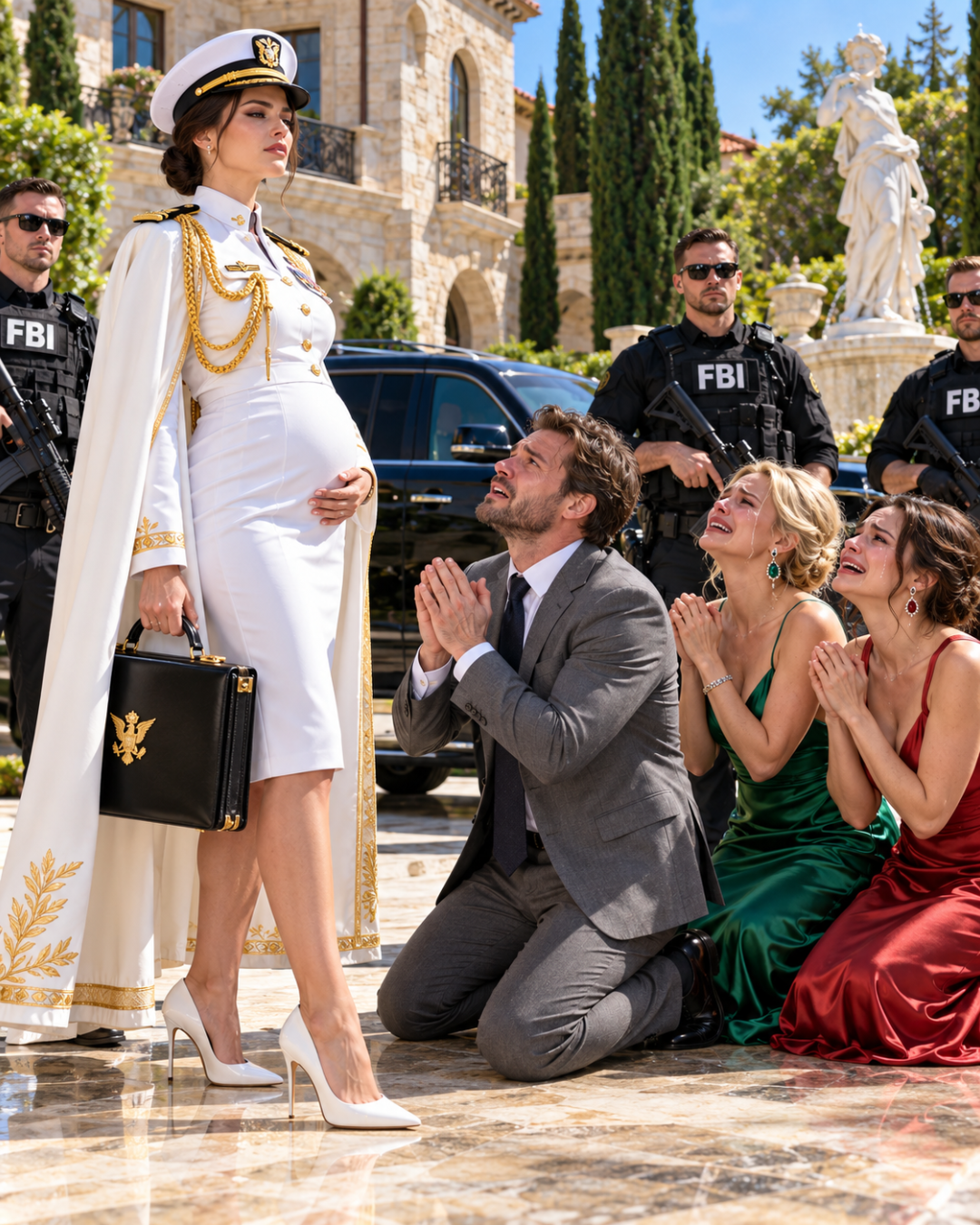
Glass sprayed across him.
He stumbled backward, screaming.
I turned toward the keyboard.
Rain and blood made my fingers slippery.
But the override procedure was embedded in my memory.
I had rehearsed it countless times.
Twenty-four alphanumeric characters.
A failsafe designed to disable a compromised server.
98%…
99%…
I pressed ENTER.
The progress bar stopped.
The screen flashed red.
FATAL ERROR. OVERRIDE ACCEPTED. PURGING DRIVE.
The server emitted a violent mechanical whine.
Blue sparks erupted from the equipment as the localized program overloaded its power supply.
The data cores began failing.
At the same time, the uncorrupted Blackwood files were transmitted to the Pentagon’s secure server.
Henderson screamed.
“No!”
He dropped the dead-man’s switch.
It struck the wet pavement.
Nothing happened.
There was no EMP.
The detonator had been a bluff.
Before Henderson could escape, my father charged forward.
He drove the operative to the flooded concrete and restrained him until tactical personnel secured the arrest.
I remained leaning against the damaged server.
My breathing came in painful gasps.
Rain streamed across my face.
The immediate danger was over.
Dad handed Henderson to the military police and hurried toward me.
My legs gave way.
He caught me before I struck the ground.
“I got you, Claire,” Dad whispered fiercely, picking me up in his arms, ignoring the blood soaking his uniform. “I’ve got you. Mission accomplished, soldier.”
I looked toward the dark sky.
For the first time in six months, I felt the weight of the threat beginning to lift.
The stolen intelligence had been secured.
Henderson had been captured.
But the victory that mattered most was waiting back at the hospital.
PART 3: Dawn of the Unbreakable
Three weeks later, sunlight streamed through the enormous windows of the neonatal intensive care unit.
Golden light filled the hospital gardens beyond the glass.
Everything about my life had changed.
Ryan Miller was being held in a maximum-security federal penitentiary while awaiting trial on charges of high treason, espionage, and conspiracy to commit murder.
Investigators had recovered recordings documenting his manipulation of Melissa.
Financial records also established his connection to Henderson.
Together, the evidence revealed the calculated betrayal he had concealed behind the appearance of a devoted marriage.
Melissa and Susan faced serious felony charges involving assault and criminal negligence.
When federal investigators played the recording of Ryan admitting he had manipulated them, Melissa suffered a psychological breakdown during questioning.
The family that had once considered itself superior to everyone else had been destroyed by its own cruelty.
Blackwood Defense had also collapsed.
The intelligence I recovered prompted coordinated FBI and military operations across twelve countries.
Assets were frozen.
Executives were indicted.
The secret network that had been transferring military information to hostile foreign organizations was exposed.
But standing in the NICU, those developments felt distant.
My attention belonged entirely to the tiny girl sleeping inside the clear incubator before me.
She was wrapped in a soft pink blanket.
Monitoring wires remained attached to her small chest.
But the ventilator tube was gone.
She was breathing on her own.
Each breath was steady.
Each rise of her chest was a miracle.
Her tiny fists were clenched.
Even while sleeping, her eyebrows drew together in an expression of stubborn determination.
I smiled.
She had already fought harder for her life than anyone should ever have to.
The NICU door opened quietly.
Dad entered.
For once, he wasn’t wearing his military uniform.
He had chosen a simple sweater and trousers.
Without the medals and stars, he looked less like a powerful general and more like what he truly was in that moment.
A grandfather.
He stopped beside me and wrapped a warm arm around my shoulders.
“How is she today?” he asked quietly.
I smiled.
“She pulled off her own heart monitor tape this morning,” I smiled, a genuine, unburdened smile. “The nurses said she put up a hell of a fight when they tried to put it back.”
Dad chuckled.
“She is a Bennett, through and through. What is her name, Claire?”
I looked down at my daughter.
This tiny child had survived the freezing balcony, months of poisoning, and an emergency delivery at only twenty-eight weeks.
She had entered the world fighting.
And she was still fighting.
“Victoria,” I said softly, touching the glass. “Because we didn’t just survive them, Dad. We conquered them.”
Dad placed his hand over mine.
“Yes, we did.”
I knew my recovery would take time.
The surgical wounds would heal gradually.
The damage caused by the poisoning would require careful treatment.
And the emotional scars left by Ryan’s betrayal might never disappear completely.
I had loved him.
I had trusted him.
I had believed the man who brought me tea every evening was protecting me and our unborn daughter.
Instead, he had deliberately turned my vulnerability into a weapon.
That knowledge would remain with me.
But it would not define the rest of my life.
I looked at Victoria again.
Her little chest rose.
Then fell.
Another breath.
Another victory.
The people who betrayed me had wanted to leave me helpless, freezing on a balcony while my unborn daughter fought for survival.
They believed they could destroy me through fear, manipulation, and the trust I had placed in them.
Instead, they had awakened the soldier they never truly understood.
And now, standing beside my father in the warm morning sunlight, watching my daughter breathe on her own, I finally understood something.
They had failed.
They had not broken me.
They had not taken my daughter.
They had not silenced the truth.
We had survived.
And we were unbreakable.
