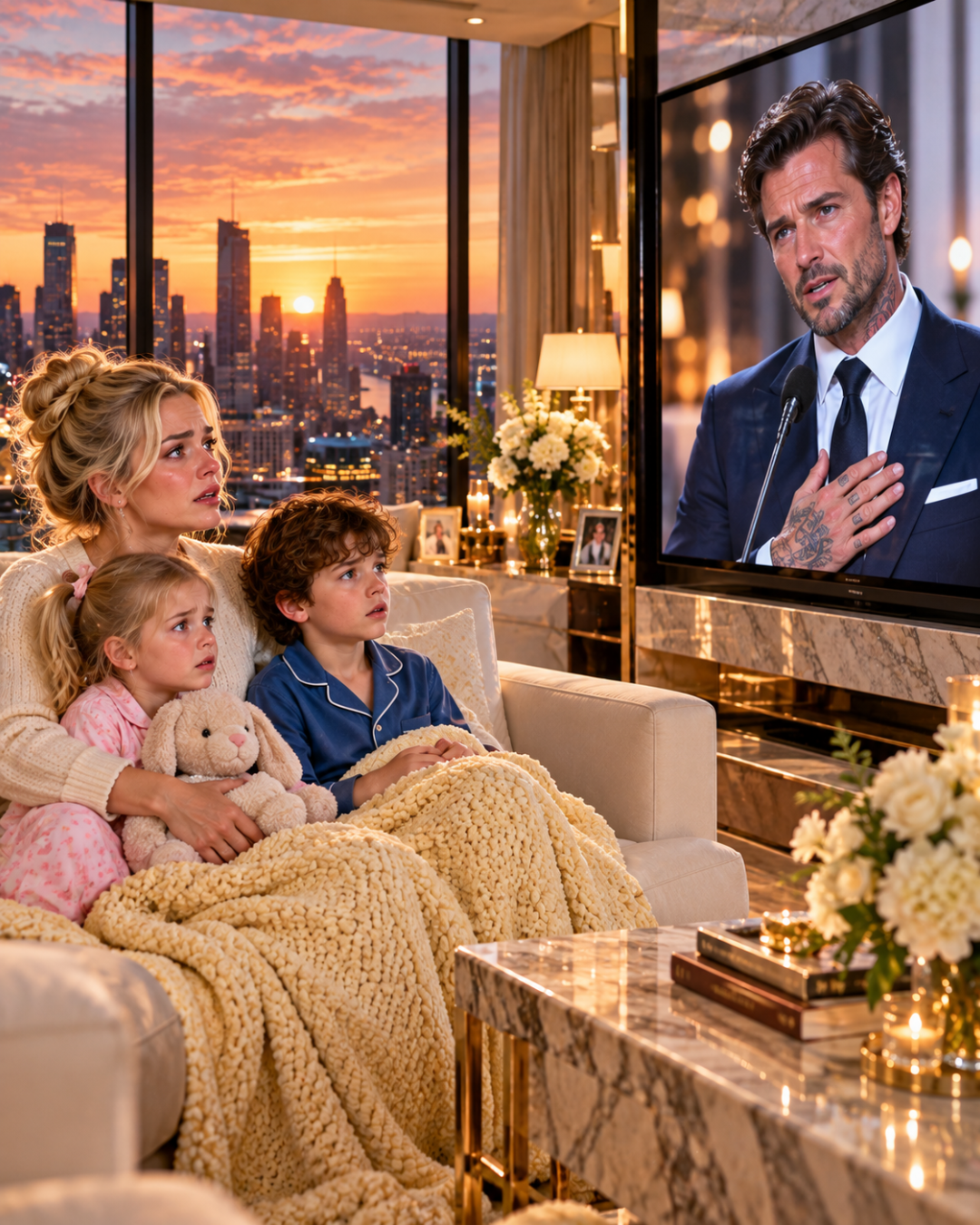
PART 1: THE CHILDREN HE NEVER KNEW
At exactly 8:44 p.m., I stood with Noah and Sophie in the quiet hallway outside the Sullivan Group ballroom.
Beyond the closed doors, I could hear laughter, soft piano music, and the steady hum of conversation from Chicago’s wealthiest and most influential guests.
Inside, crystal chandeliers glittered above hundreds of people celebrating my former husband’s extraordinary success.
Outside, his ten-year-old twins were preparing to meet him for the first time.
Sophie smoothed the front of her blue dress.
“Is the sparkle too much?”
“No,” I assured her. “It’s just the right amount.”
Noah glanced at the gold watch Lucas had lent him.
“Based on the program, Dad begins his speech in forty-six seconds.”
“You don’t need to call him Dad.”
He adjusted his glasses.
“He’s our biological father. I won’t call him Mr. Sullivan unless he deserves something more familiar.”

Lucas Bennett, our attorney, stood beside the entrance with a folder beneath his arm.
“You’ve wanted to say that for ten years, haven’t you?”
“Not really,” Noah replied. “I only discovered that expression last week.”
Sophie slipped her hand into mine.
“Mom?”
“Yes, sweetheart?”
“What happens if he doesn’t want us?”
The question almost broke my heart.
I knelt in front of her, careful not to disturb the tiny silver stars Aunt Maribel had painted near her eyes.
“Then that’s a decision he makes,” I answered. “It will never determine how valuable you are.”
“But what if he’s shocked?”
“He most likely will be.”
“What if he becomes upset?”
“Then we’ll leave.”
Noah’s expression became serious.
“What if he accuses you of lying?”
I inhaled slowly.
“Then I’ll explain the truth.”
For ten years, I had tried to live by those words.
Not revenge.
Not retaliation.
Only the truth.
Lucas checked his phone.
“Ladies and gentlemen,” he whispered, “the speech is underway.”
The ballroom doors opened.
At first, nobody noticed us.
Waiters moved between tables carrying champagne. Business leaders exchanged greetings beneath enormous floral arrangements. A silver Sullivan Group emblem filled the screen behind the stage.
Then Ethan’s voice echoed through the ballroom.
“Success cannot be defined by what any individual creates alone.”
He stood beneath the lights in a charcoal suit, looking almost exactly as he had during the television interview that brought us here.
But from the doorway, I noticed details the cameras had concealed.
The tension around his mouth.
The slight trembling of his left hand.
The way his eyes repeatedly moved toward the entrance.
“Every accomplishment,” Ethan continued, “comes from those who trusted us long before anyone recognized our names.”
Applause filled the room.
Sophie tightened her grip on my hand.
Noah murmured, “That sounds carefully practiced.”
“It probably was.”
“Even so,” he replied, “the wording has promise.”
We stepped inside.
A few guests turned.
Then more.
A woman holding champagne stopped in the middle of a sentence.
Whispers spread across the room.
And then Ethan saw us.
His speech stopped.
For one extraordinary moment, the billionaire standing before Chicago’s elite looked exactly like the twenty-eight-year-old husband who had thrown thirty dollars toward me and told me to disappear.
Not powerful.
Not untouchable.
Simply stunned.
His eyes moved from my face to Noah’s.
Then to Sophie’s.
Then back again.
Noah stood straight, his dark hair neatly combed.
Sophie lifted her chin, although her fingers trembled.
Ethan went pale.
“Claire?”
I approached the stage.
“Good evening, Ethan.”
He stared at the children.
“Who are they?”
Noah took a measured breath.
Sophie looked toward me.
I had imagined this conversation hundreds of times.
But I hadn’t anticipated the fear in Ethan’s voice.
“Their names are Noah and Sophie,” I said. “They’re ten years old.”
Noah nodded politely.
“Hello.”
Sophie followed.
“Hi.”
The ballroom fell silent.
Ethan lowered the microphone.
“Claire, what’s going on?”
“This is your corporate gala.”
His expression tightened.
“You understand what I’m asking.”
“I do.”
I looked around at the executives, investors, journalists, and guests who had heard Ethan announce on television that his greatest regret was never becoming a father.
“These are your children.”
Whispers swept through the room.
Ethan gripped the microphone.
“No.”
Noah tilted his head.
“That appears to be a rather complicated emotional reaction to scientifically confirmed biological facts.”
“No,” Ethan repeated. “That cannot be true.”
“But it is.”
“You told me—”
“I never told you anything,” I interrupted. “You ordered me to leave.”
For an instant, I saw the familiar defensiveness return to his face.
Then he looked at the twins again.
Whatever argument he had been preparing disappeared.
Martin Bell, Sullivan Group’s chief operating officer, approached.
“Ethan, maybe we ought to discuss this privately.”
I recognized Martin from our early married years.
He had attended our wedding.
After our separation, he had barely been able to look at me.
“I didn’t arrive intending to cause a disturbance,” I explained. “I came because you announced publicly that you had never been a father.”
Ethan stared at me.
“You watched the interview.”
“Everybody watched it.”
“And you believed bringing them here was the right thing to do?”
“I believed the truth belonged in the same room where you had publicly repeated something untrue.”
Lucas stepped forward.
“Mr. Sullivan, I possess legal records confirming paternity, including protected hospital documentation, birth certificates, and genetic testing performed through an accredited laboratory.”
Ethan turned sharply.
“Who are you?”
“Lucas Bennett. I’m the legal representative for Claire and her children.”
“You organized this?”
“I ensured my clients could attend an event for which they had received lawful invitations.”
Ethan faced me.
“Why today?”
That question carried more weight than anything else he had said.
Why hadn’t I come sooner?
Why hadn’t I contacted him when the twins were born?
Why had I waited until they were ten?
“I never wanted to make you become part of their lives,” I answered. “I wanted them to grow up without believing their father had deliberately rejected them as individuals.”
Sophie lowered her eyes.
“They understand you left before their birth,” I continued. “They know I brought them up. They also know you never wrote, telephoned, or checked whether we were doing well.”
Ethan visibly recoiled.
Noah studied him.
“But we understand that adults sometimes make mistakes,” he said. “That’s why Mom suggested meeting you before we decide what kind of person you really are.”
Ethan stared at him.
“Did your mother tell you to say that?”
“No.”
“Then why did you say it?”
“Because I believe it.”
Sophie moved closer.
“We wanted to know whether you resembled the photographs.”
Ethan looked at her.
“Which photographs?”
“Mom saved one from before you were well-known.”
My stomach tightened.
“I found it inside an old box,” she explained. “You looked younger. Your hair was longer.”
“And your tie was awful,” Noah added.
For the first time, Ethan almost smiled.
Then his expression changed.
“Claire,” he whispered, “I had no idea.”
Those four words unsettled me more than any accusation could have.
“You were aware I was expecting,” I replied.
“No.”
He answered immediately.
I could barely breathe.
“What?”
“I had no idea you were pregnant.”
“You demanded that I disappear.”
“I told you to go because I believed you had already chosen.”
“Chosen what?”
“To return to Daniel.”
I stared at him.
“Daniel?”
Daniel Mercer had been Ethan’s closest companion during the early years of our marriage.
Ethan had discovered messages Daniel sent asking whether I needed assistance.
He had convinced himself we were having an affair.
There had never been an affair.
I had contacted Daniel about employment because Ethan’s mother had restricted my access to our accounts.
“Daniel?” I repeated.
“You said you needed distance,” Ethan answered. “You packed your belongings. Then I discovered his messages.”
“I contacted him about work.”
“Because you planned to leave me.”
“Because your mother restricted access to our bank accounts and insisted I didn’t belong in your family.”
His expression changed.
“What?”
“She accused me of marrying you for money. She gave me divorce documents and promised that signing them would provide enough for a fresh beginning.”
“I knew nothing about that.”
“You signed the agreement.”
“I signed whatever documents your lawyer presented.”
“Without reading them?”
“I was away in New York.”
“Your signature eliminated every financial claim I had against your family’s property, Ethan.”
He looked around the ballroom.
For the first time, his reputation seemed less important than the possibility that everything he believed about our marriage had been false.
Martin approached again.
“Ethan, we should temporarily stop the presentation.”
“No,” Ethan answered.
He faced me.
“Did you walk away that evening because my mother instructed you to?”
“I walked away because you demanded it.”
“What about the money?”
“You tossed thirty dollars toward me.”
He looked confused.
“I have no memory of that.”
“But I remember.”
“I don’t recall handing you any money.”
“You said, ‘Take it and disappear.’”
He closed his eyes.
The ballroom was so quiet I could hear the audio equipment humming.
When he looked at the twins again, his voice had changed.
“Are they truly my children?”
Lucas offered him a sealed envelope.
“The DNA results are enclosed. You may request independent testing to confirm them.”
Ethan didn’t take it.
Instead, he looked at Noah and Sophie.
“Are you scared?”
Sophie considered the question.
“Not scared.”
“Then how do you feel?”
“Uncertain.”
He nodded slowly.
“I understand.”
“No, you don’t,” Noah replied. “You’ve had ten years to learn about us. We’ve only had ten minutes to learn about you.”
I placed my hand on his shoulder.
“That’s enough.”
Ethan stepped away from the microphone.
“Claire, I need a private conversation with you.”
“I won’t leave the children.”
“I haven’t asked you to.”
“Then tell me whatever you need to say right here.”
He looked around.
“Not with everyone watching.”
“You made your announcement while everyone was watching.”
After a moment, he turned toward Martin.
“End the remaining program.”
“Ethan—”
“End it.”
The presentation screens began shutting down.
Guests gradually moved toward the exits.
Ethan approached the twins and crouched to their height.
“Could I ask you two something?”
Noah glanced at me.
I nodded.
“What activities do you enjoy?” Ethan asked.
“Creating things,” Noah answered.
“What kinds of things?”
“Miniature robots. Also business models.”
“Business models?”
“He enjoys mathematics,” I explained.
“Numbers tell the truth,” Noah added.
Ethan looked toward me.
“I suppose that’s right.”
Sophie touched the decorations on her dress.
“I enjoy painting. And dancing. And reading stories about women who travel independently and become explorers.”
Ethan smiled faintly.
“Your mother travels independently.”
“She doesn’t have enough time to become an explorer. She needs to work.”
He turned toward me.
“What kind of work do you do?”
“I run my own design company.”
“You own a design company?”
“You never bothered to ask.”
He lowered his gaze.
“No,” he admitted. “I never did.”
By then, only a handful of people remained.
Martin.
Lucas.
Two members of Ethan’s legal department.
And Rebecca Cole, the public relations executive who had accompanied Ethan to his television interview.
Ethan accepted the folder from Lucas.
He studied the birth certificates.
Noah Sullivan.
Sophie Sullivan.
Mother: Claire Sullivan.
Father: Ethan Sullivan.
His fingers lingered over their names.
Then he opened the DNA results.
He read the pages carefully.
Sophie tugged my sleeve.
“Mom, will we be going home soon?”
“Very soon.”
Ethan looked up.
“Please don’t go just yet.”
“Why?”
“Because I have to figure out what really happened.”
“You’ve already had a decade.”
“I understand.”
“Then begin by acknowledging the truth.”
He frowned.
“What truth?”
“That I visited your office the morning after you told me to leave.”
He stared at me.
“You never visited my office.”
“Yes, I did. Your assistant claimed you were attending a meeting.”
“Which assistant?”
“Margaret.”
Ethan went still.
“Margaret Hale?”
“That’s right.”
Rebecca suddenly shifted away from the stage.
“Ethan,” she said cautiously, “maybe this discussion should happen another day.”
I turned toward her.
“Why?”
She looked startled.
“Pardon me?”
“Why should we postpone it?”
Ethan was already watching her.
“Were you aware of this?” he demanded.
Rebecca hesitated.
“I knew Margaret managed your private correspondence during those years.”
“That wasn’t what I asked.”
“I had no involvement in your private relationships.”
Ethan’s voice hardened.
“But you knew enough to arrange the interview where I claimed I had no children.”
Rebecca tightened her grip on her tablet.
He stepped closer.
“Who prepared that response?”
She remained silent.
“Who prepared the questions?”
“The television network supplied the questions.”
“And who prepared my responses?”
“I put together the briefing materials.”
“What information did they contain?”
She looked away.
“Get me the original document.”
“I don’t have access to it.”
“Why?”
Rebecca’s carefully controlled expression finally faltered.
“Because Margaret destroyed the original draft.”
Ethan stared at her.
“What original draft?”
Rebecca inhaled deeply.
“The interview originally focused on your company’s European expansion. The producer requested something personal, and Margaret proposed including questions about your family.”
“I don’t have a family,” Ethan replied.
“You were married.”
“Previously married.”
“Margaret claimed the marriage had been annulled.”
I shook my head.
“I never moved abroad.”
Rebecca looked at me.
“I know.”
Ethan turned toward her.
“You knew?”
Her eyes filled with tears.
“I discovered the documents three years ago.”
“Which documents?”
“Your divorce records. Margaret had stored them in the old executive archives.”
“Why didn’t you tell me?”
“Because the company was preparing to go public. Margaret assured me you already knew everything and claimed Claire had signed a confidentiality agreement.”
“I never knew.”
“I realize that now.”
“Only now?”
Rebecca opened her leather document case and removed a narrow envelope.
“This arrived yesterday.”
Ethan stared at it.
“Who sent it?”
“Margaret.”
My heartbeat quickened.
Rebecca handed him the envelope.
Ethan broke the seal and unfolded the letter.
His eyes moved across the page.
Then he read it again.
His face drained of color.
A small photograph slipped from the envelope and fell to the floor.
I bent to retrieve it.
And when I turned it over, my entire body went cold.
It was a photograph of Noah as a newborn.
A second picture showed Sophie.
On the backs of the photographs, Margaret had written six words.
He deserved to know they survived.
PART 2: THE LETTER THAT EXPOSED TEN YEARS OF LIES
I stood motionless, holding the photographs of my newborn twins.
Noah lay bundled inside a white hospital blanket, his tiny face serious even then.
Sophie slept with one little fist beneath her chin.
I remembered those moments.
The rain against the hospital window.
The nurse asking whether anyone could be contacted.
The terrifying loneliness of realizing there was nobody I could call.
I had held each baby close and promised that neither would ever have to question whether they were loved.
Now, ten years later, I was staring at photographs I hadn’t known existed outside my own collection.
And on the back was Margaret Hale’s handwriting.
He deserved to know they survived.
Survived.
The word felt unbearably cruel.
“Could I read the letter?” I asked.
Ethan looked at me.
His face had lost every trace of the confidence he displayed on television.
Finally, he handed it over.
His fingers were trembling.
I unfolded the pages.
The letter began with an admission Margaret had apparently spent years avoiding.
She had prevented me from seeing Ethan.
I had visited his office on March 14 wearing a gray coat and carrying a folder.
I had explained that I was pregnant and needed to speak with him before leaving Chicago.

Ethan had been inside the building.
He wasn’t attending a meeting.
Margaret had lied because Eleanor Sullivan, Ethan’s mother, ordered her to prevent contact between us.
Eleanor had already arranged the divorce paperwork.
She claimed I had been unfaithful.
She insisted that maintaining a connection with me would damage Ethan’s future.
She also claimed Daniel Mercer was the father of my unborn child.
Margaret admitted that she knew the accusation was false.
She had examined the medical documents I brought.
She knew I was expecting Ethan’s child.
But she remained silent.
A week later, I had returned to the office.
My pregnancy was becoming visible.
Margaret told me Ethan had traveled abroad and wanted no further communication.
Again, she was following Eleanor’s instructions.
Then came the most painful admission.
The hospital had sent photographs after the twins were born.
I had identified Ethan as their father.
But when attempts to contact him went unanswered, the paperwork was transferred into the correspondence archive.
Margaret kept copies.
She had known for ten years that Noah and Sophie existed.
And she had allowed Ethan to believe otherwise.
I lowered the letter.
Ethan watched me.
“Were you aware?” he asked.
“I knew about my pregnancy.”
He shut his eyes.
“Claire.”
“I had no idea she had contacted you. I didn’t know she possessed photographs. None of this was known to me.”
“But you knew we had twins.”
“Yes.”
“Why didn’t you contact me?”
There was no accusation in his voice.
That made answering harder.
“Because you had already ordered me to vanish,” I replied. “Because every possible way of reaching you had been blocked. Because when I visited your office, someone told me you refused to meet me. And because eventually, I stopped believing there was any reason to beg someone to care about our family.”
He didn’t interrupt.
For the first time, he seemed willing to listen without defending himself.
Noah stepped closer.
“Mom, is that really us?”
“Yes.”
“Were we actually so tiny?”
“Both of you were smaller than the blanket.”
Sophie studied the photographs.
“Which baby is me?”
I pointed.
“You arrived three minutes after your brother.”
She smiled.
“I seem very peaceful.”
“You certainly weren’t.”
“Really?”
“You cried for nearly an hour.”
She considered that.
“I was communicating my feelings.”
Noah looked toward Ethan.
“Why does he have those?”
Ethan swallowed.
“Someone saved them.”
“For what reason?”
“Because they believed I deserved to learn about you.”
“But they never informed you.”
“No.”
Noah nodded thoughtfully.
“Then their decision was wrong.”
“Yes,” Ethan answered. “It was.”
Sophie looked up at me.
“Are we going home anyway?”
“Yes.”
Ethan’s expression tightened.
“Would it be possible for me to join you?”
Nobody answered immediately.
He glanced between the twins.
“I’m not asking to remain there. I realize I haven’t earned that privilege. I’d simply like to speak somewhere more private, provided you’re comfortable.”
I hesitated.
I didn’t want to encourage hope that might later become disappointment.
Noah seemed to recognize my uncertainty.
“Mom, we could return to our house while he returns to his.”
Ethan nodded.
“That sounds reasonable.”
Then Sophie spoke.
“You could visit for dinner tomorrow.”
Everyone turned toward her.
She shrugged.
“Mom cooks soup whenever she’s thinking. If you visit tomorrow, perhaps she’ll accidentally prepare too much.”
A small smile appeared on Ethan’s face.
“I’d really enjoy that.”
I looked at Sophie.
She wasn’t asking me to forgive Ethan.
She was offering him one meal.
Nothing more.
“Tomorrow,” I agreed. “At six. Come by yourself.”
“Absolutely.”
“And don’t bring attorneys.”
“I won’t.”
“Or journalists.”
“I won’t.”
“And no presents.”
He hesitated.
Sophie raised an eyebrow.
“Particularly expensive presents.”
“Understood.”
Noah cleared his throat.
“A sensible introductory present might be a book.”
“What sort of book?” Ethan asked.
“Anything unrelated to business.”
“I think I can handle that.”
Lucas approached.
“Claire, it’s time for us to go.”
We headed toward the exit.
Ethan stepped aside, watching us quietly.
In the hallway, Sophie slipped her hand into mine.
“Mom?”
“Yes?”
“Was he always so unhappy?”
“No.”
“Do you think he’s unhappy now because of us?”
“No,” I answered. “He’s unhappy because he’s beginning to understand that his decisions affected other people.”
Noah walked beside us.
“And because he lost ten years.”
“That’s right.”
“Can someone miss something without knowing that thing even exists?”
I thought about it.
“Sometimes, yes.”
“That seems rather inefficient.”
I smiled.
“It certainly is.”
As the elevator doors closed, I caught one last glimpse of Ethan standing beneath the dimmed stage lights.
He was still holding the photographs.
For the first time in a decade, he looked like a man who had discovered the beginning of a story he should have known all along.
The next morning, I woke before sunrise.
Margaret’s letter had kept me awake.
One sentence repeated in my mind.
You were inside the building that day.
You were not attending a meeting.
For ten years, I had believed Ethan knew about my pregnancy and deliberately abandoned our children.
Now I knew he had never received the information.
That changed my understanding of the past.
But it didn’t erase his cruelty.
It didn’t erase the thirty dollars.
It didn’t erase the night he told me to disappear.
And it certainly didn’t erase the months I spent preparing for two babies without his support.
At seven, I called Lucas.
“Find Margaret’s current address.”
“I’ve already begun looking.”
“What have you discovered?”
“She left Sullivan Group six years ago. Afterward, she relocated to Wisconsin. She currently lives near Madison with her sister.”
“Is she experiencing health problems?”
“I haven’t confirmed that.”
“Please investigate.”
“I will.”
“And obtain the original divorce records.”
“That’s already underway.”
I stood beside the kitchen window.
“Lucas.”
“Yes?”
“Did Ethan’s mother actually tell Margaret that Daniel was the baby’s father?”
“That’s what Margaret claims in her letter.”
“I want evidence.”
“We might not find any.”
“I still need answers.”
After ending the call, I discovered Noah and Sophie making breakfast.
Noah was carefully weighing flour.
Sophie was trying to crack an egg without dropping pieces of shell into the bowl.
“What are you two preparing?”
“Breakfast,” Noah answered.
“What’s the occasion?”
“Emotionally challenging situations require adequate protein.”
Sophie held up a cracked egg.
“I’m preparing pancakes.”
“You’re conducting a biological experiment,” Noah informed her.
She frowned.
“Mom, he’s making negative comments about my cooking skills.”
“I’m certain he’ll recover.”
Noah looked toward me.
“Did you get any sleep?”
“A little bit.”
“Did Dad get any sleep?”
“I have no idea.”
“Did you ask him?”
“No.”
He nodded thoughtfully.
Sophie continued stirring.
“Do you think he’ll show up tonight?”
“I believe he will.”
“What happens if he decides not to?”
“Then we’ll enjoy the soup without him.”
At exactly six that evening, Ethan arrived.
He wore a dark sweater instead of a business suit.
There was no chauffeur.
No security team.
No extravagant gift.
Just a paper bag in his hand.
I opened the door.
“You arrived early.”
“By seven minutes.”
“That’s still early.”
“I couldn’t predict how much time the journey would require.”
“You own the largest transportation company in this city.”
“I’m aware.”
“Then you should understand the travel time from downtown.”
“My mind was elsewhere.”
I stepped aside.
He entered and immediately noticed the photographs covering our walls.
Noah at kindergarten.
Sophie laughing beside a pony.
The twins covered in flour at eight.
The twins proudly displaying their homemade robot at nine.
Ten years of birthdays, school activities, and ordinary family memories.
Ethan stared at them.
“Would you mind?”
“Go ahead and look.”
He approached the photographs slowly.
Sophie appeared with a spoon.
“You actually came.”
“I certainly did.”
“Did you remember the book?”
He raised the paper bag.
“A book, plus something additional.”
Noah joined us.
“What else did you bring?”
“Something to make up for what I should have offered you ten years earlier.”
He removed two small leather-bound notebooks.
“What are these for?” Noah asked.
“For writing down whatever matters to you.”
Noah examined his.
“This meets my expectations.”
Ethan handed Sophie the second notebook.
“And this one contains paper suitable for watercolor painting.”
She opened it.
“I really like this.”
“I’m glad.”
Ethan returned his attention to the photographs.
He stopped before the twins’ first kindergarten picture.
“Who photographed this moment?”
“I took the picture.”
“Were you by yourself?”
“Yes.”
His expression changed.
“I should have shared that moment.”
“Yes, you should.”
He nodded.
“I understand.”
Dinner began awkwardly.
Ethan sat at one end of the table while the twins faced him.
I served vegetable soup, bread, and salad.
For several minutes, the only sounds came from spoons touching bowls.
Then Sophie asked:
“What did you usually eat when you were ten?”
Ethan looked surprised.
“Whatever our household cook made.”
“That doesn’t really answer my question.”
He glanced at me.
I almost smiled.
“Mostly soup,” he answered. “Sometimes pasta.”
“Did you especially like anything?”
“Pancakes.”
Noah turned toward Sophie.
“That doesn’t explain anything.”
“How come?”
“Pancakes aren’t particularly sophisticated from a structural perspective.”
Ethan burst into laughter.
The twins looked startled.
Sophie grinned.
“You actually laughed.”
“I suppose I did.”
“You ought to laugh more often.”
Ethan looked into his bowl.
“I’ll make an effort.”
Gradually, conversation became easier.
He described starting his first business in a rented office with only two desks.
Noah asked about investors.
Sophie wanted to know whether he had visited Paris.
Ethan answered everything.
When Noah asked whether he had always wanted to become wealthy, Ethan hesitated.
“No. I wanted freedom.”
“Those things aren’t identical.”
“No. They’re different.”
“Then why didn’t you stop?”
Ethan glanced toward me.
“Because I feared losing everything I’d gained.”
Noah frowned.
“Didn’t you already have nothing?”
“That’s not quite right.”
“What did you possess?”
Ethan looked around our apartment.
“I had people who cared about me. I failed to recognize how precious they were.”
Sophie set down her spoon.
“Do you recognize that now?”
Ethan met her eyes.
“I’m starting to understand.”
After dinner, the twins showed him their robot.
It moved across the living room, bumped into a chair, and continued circling.
Ethan crouched beside it.
“What’s its purpose?”
“It identifies obstacles,” Noah explained.
“It appears to have identified that chair.”
“It identified the chair on an emotional level.”
Ethan laughed.
He suggested adjusting the sensor by two degrees.
Noah considered the idea.
They made the adjustment together.
The robot moved forward, stopped before the chair, and changed direction.
Sophie clapped.
“It actually worked!”
Ethan smiled.
Noah looked at him with something new in his expression.
Curiosity.
Perhaps the beginning of trust.
Then my phone vibrated.
Lucas.
I stepped into the hallway.
“What have you found?”
“I located the divorce records.”
“And?”
“Two different versions of the agreement exist.”
My fingers tightened around the phone.
“What do you mean?”
“The document you signed differs from the version submitted to the court.”
“What’s the difference?”
“The court’s version contains a provision confirming your pregnancy.”
I stopped breathing.
“Excuse me?”
“Your copy declares that there were no children and no ongoing pregnancy. However, the filed document states both parties knew Claire Sullivan was pregnant when the agreement was executed and that Ethan Sullivan accepted responsibility for any child delivered during the marriage.”
I stared through the doorway.
Ethan was sitting on the carpet with our children.
“Whose signature appears on the filed version?”
“Ethan’s.”
“And mine?”
“That’s where things become complicated. Your signature is present on both agreements.”
“I signed only one set of papers.”
“I believe you.”
“Then who submitted the documents?”
“Your former mother-in-law’s lawyer. Harold Vance.”
I tried to steady my breathing.
Eleanor Sullivan had lied about my pregnancy.
Margaret had hidden the photographs.
Someone had altered the divorce paperwork.
This was no longer merely a misunderstanding.
Someone had deliberately prevented our family from finding one another.
Lucas spoke again.
“I discovered something additional.”
“What?”
“The court records contain an authorization for payment dated the day after the divorce.”
“Who received the money?”
“A private investigator.”
“Who requested his services?”
“The payment authorization carries your mother-in-law’s signature.”
I looked toward Ethan.
He was laughing softly as Sophie demonstrated the robot.
“Who was the investigator?”
Lucas paused.
Then he answered.
“Daniel Mercer.”
PART 3: THE TRUTH THAT FINALLY SET US FREE
For a moment, the hallway seemed completely silent.
Daniel Mercer.
The man Ethan had once accused me of loving.
The man whose messages had helped destroy our marriage.
And now I was learning that Eleanor Sullivan had hired him as a private investigator immediately after our divorce.
It made no sense.
“Are you absolutely certain?” I asked Lucas.
“The paperwork is right in front of me.”
“Could someone else have the same name?”
“I verified his identity. The address matches the Daniel Mercer who worked alongside Ethan during Sullivan Group’s early years.”
“Locate him.”
“I’ve already found him. He currently lives in Minneapolis and operates a consulting business.”
“Have you contacted him?”
“Not yet.”
“Call him immediately.”
Lucas hesitated.
“The payment was processed one day after the divorce documents were submitted. The investigator’s assignment was labeled confidential.”
“What was he hired to investigate?”
“I can’t confirm that. Some documents are missing.”
“Then locate the remaining records.”
“I’ll contact Daniel this evening.”
I glanced toward the living room.
Ethan was still helping Noah and Sophie.
“Please don’t mention this to Ethan yet.”
“Are you certain?”
“I need to understand what we’re facing before asking him to confront another painful part of his past.”
“Understood.”
I ended the call.
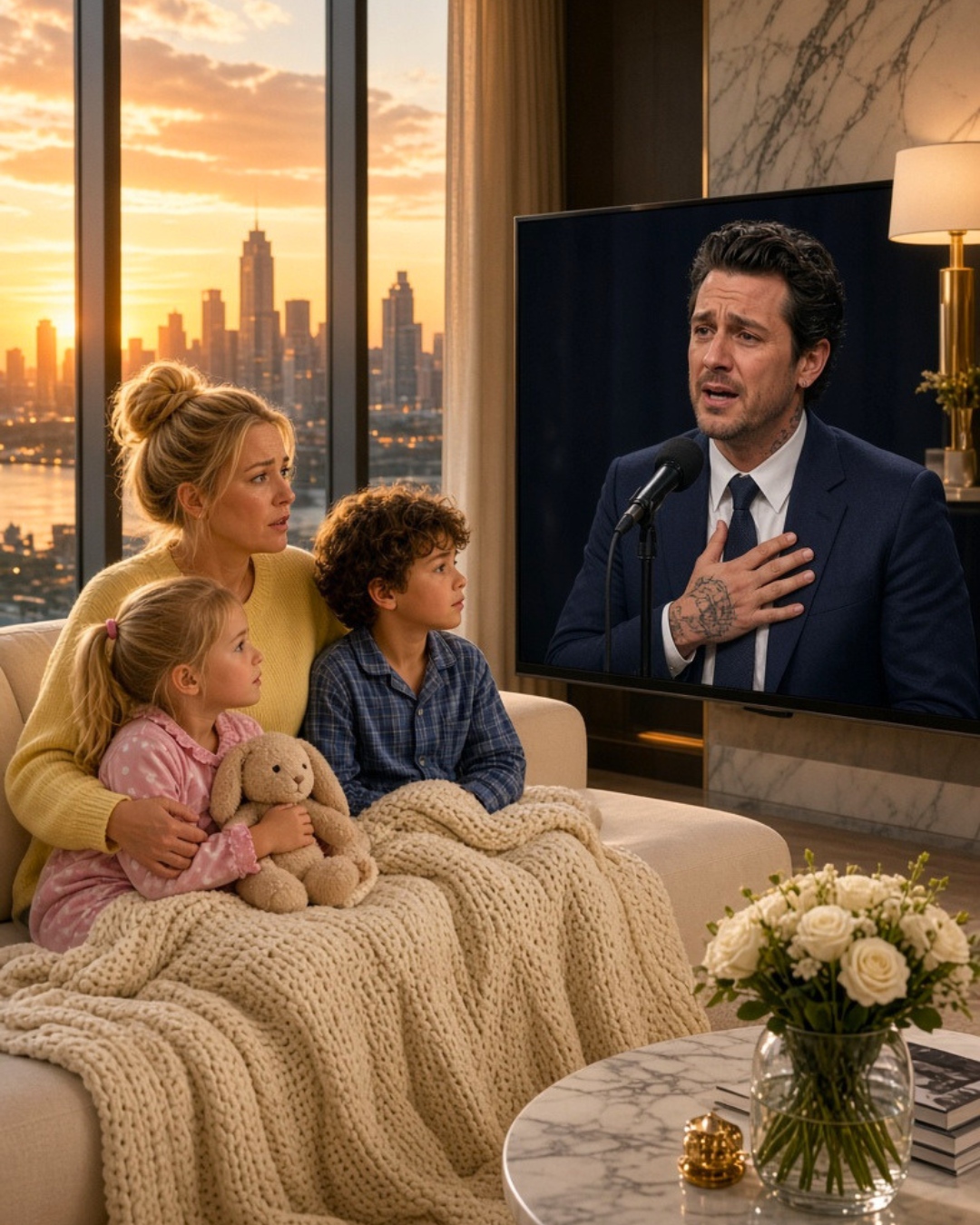
When I returned, Ethan looked up.
“Is everything okay?”
“Yes. Lucas discovered some additional paperwork.”
“What sort of paperwork?”
“Documents from our divorce.”
His smile faded.
“What did he discover?”
I looked at the children.
“Nothing that requires a conversation this evening.”
Ethan understood.
He didn’t insist.
Instead, he returned his attention to the twins.
Noah noticed.
“Mom is obviously keeping something private.”
“Yes, she is,” Ethan agreed.
“Does that concern you?”
“It does.”
Noah considered his answer.
“In that case, you may remain for the demonstration.”
Ethan sat down again.
His patience meant more to me than he realized.
After he left, Sophie stood beside me at the window.
“Did you enjoy having him visit?”
“Yes.”
“Do you think he enjoyed meeting us?”
“He certainly did.”
“Are you positive?”
“Absolutely.”
Noah approached with the robot.
“His behavior demonstrated a consistent pattern of genuine curiosity.”
Sophie frowned.
“Could you please talk like a normal person?”
“He liked us.”
“Much better.”
Noah set the robot down.
“Do you believe we’ll meet him again?”
“If that’s what you both want.”
“Is that what you want?”
I looked at my children.
For years, I had protected them from disappointment.
But perhaps protecting them didn’t mean preventing every possibility of being hurt.
Perhaps it meant allowing them to make informed choices while knowing I would always stand beside them.
“Yes,” I answered. “I believe it is.”
The following morning, Lucas called before breakfast.
“Daniel has agreed to meet with us.”
“Where?”
“He’s taking a flight to Chicago this afternoon.”
“Why?”
“He claims there are matters he should have clarified a long time ago.”
Daniel arrived at Lucas’s office at four.
He carried an old leather folder.
Silver had begun appearing around his temples, but I recognized him immediately.
He stopped when he saw me.
“I’m sorry.”
No greeting.
No small talk.
Just an apology.
“What exactly are you apologizing for?” I asked.
“For waiting so long to come forward.”
“You didn’t know where to find me.”
“I knew more than enough.”
Lucas closed the office door.
Daniel placed the folder on the table.
“Ethan’s mother employed me ten years ago.”
“For what purpose?”
“She wanted me to locate you.”
I stared at him.
“But you had already located me.”
“Yes.”
“Then why were you messaging me?”
“Because she claimed Ethan had personally requested that she find you without attracting attention.”
“That wasn’t the truth.”
“No, it wasn’t.”
Daniel opened the folder.
Inside were emails, financial records, and handwritten notes.
“She approached me two days after Ethan ordered you to leave. According to her, you had removed documents belonging to the Sullivan family and approached Daniel Mercer for assistance.”
“I never took any documents.”
“I understand that now.”
“What instructions did she give you?”
“She wanted to know where you intended to live. She also wanted confirmation that you were expecting Ethan’s baby. She claimed Ethan suspected another man was responsible for the pregnancy.”
My voice turned cold.
“So she already knew I was expecting.”
“Yes.”
“Why would she convince Ethan otherwise?”
“Because she wanted your marriage dissolved as quickly as possible.”
“Why?”
“She considered you a danger to the family trust.”
I laughed without humor.
“I was an expectant mother renting a modest apartment.”
“You were also legally married to Ethan. Under the trust agreement, remaining married when he assumed control of Sullivan Group would have entitled you to certain benefits.”
Lucas leaned forward.
“What kind of benefits?”
“Equity ownership. Voting privileges. Membership on the family foundation’s board.”
I stared at Daniel.
“Nobody ever explained that to me.”
“Most spouses weren’t informed. Eleanor Sullivan, however, understood every provision. She worried that you might persuade Ethan to oppose her decisions.”
I slowly exhaled.
“What happened after she employed you?”
“I located your apartment. You had rented a small place on Chicago’s north side. I visited the neighborhood once.”
A memory returned.
A man in a dark coat standing across the street.
At the time, I assumed he was waiting for someone.
“You actually saw me?”
“Yes. You were visibly pregnant and carrying shopping bags. That’s when I realized Eleanor had misrepresented the circumstances.”
“Then why didn’t you explain everything to Ethan?”
Daniel looked ashamed.
“Because I’d already made a serious error.”
“What error?”
“I had spoken with Ethan before Eleanor approached me. I mentioned receiving messages from you asking whether I could assist you in finding employment.”
“Was that the entire conversation?”
“That was everything.”
“He believed we were romantically involved.”
“I’m aware.”
“You could have explained the misunderstanding.”
“I attempted to.”
“When?”
“After you moved out, I visited his office. He was upset and refused to hear my explanation. He claimed you had admitted you intended to leave him for me.”
“I never made that statement.”
“I know you didn’t.”
“What happened afterward?”
“I encouraged him to contact you directly. He refused.”
“Because he trusted your explanation?”
“Because Eleanor had shown him a letter.”
“What letter?”
Daniel removed a photocopied page.
It was addressed to Ethan.
At first glance, the handwriting resembled mine.
But the details were wrong.
The loops.
The pressure.
The endings of certain letters.
“I didn’t write this.”
According to the letter, I had developed feelings for Daniel, was expecting his child, and wanted Ethan to stop contacting me.
I read it twice.
“Where did this letter originate?”
“Eleanor handed it to Ethan.”
Lucas studied the page.
“Did anyone examine its authenticity?”
“No.”
“Someone forged this,” I whispered.
Daniel nodded.
“I suspected as much. But Ethan refused to listen. He believed you had written it and assumed I was trying to protect you.”
“What did you do next?”
“Eleanor offered to pay me for continued updates about your circumstances.”
“And you accepted?”
“Yes.”
His answer was quiet.
“My finances were difficult. I was raising a young daughter. I convinced myself that collecting information wasn’t the same as hurting anyone. But after seeing you at the hospital, I finally understood how serious everything had become.”
“You were at the hospital?”
“I visited because Eleanor requested confirmation that the babies had been delivered.”
I remembered a man in the hallway who turned away when our eyes met.
“I saw your twins,” Daniel continued. “I saw that you had nobody beside you. I should have introduced myself. I should have contacted Ethan. Instead, I walked away.”
“Why?”
“Because I was afraid.”
I looked at the documents.
Eleanor had manipulated what Ethan believed.
Margaret had blocked communication.
Daniel had watched from a distance.
And every one of them had decided silence was easier than telling the truth.
“Where does Eleanor live now?” I asked.
“New York. She’s been dealing with health problems for several months.”
Lucas examined the records.
“Did she keep paying you after the children were born?”
“No. The payments ended when Ethan became completely occupied with managing the company. She informed me that the situation had been resolved.”
“Resolved,” I repeated.
Daniel lowered his gaze.
“I’m deeply sorry, Claire.”
“You have every reason to apologize.”
“I understand.”
“And Ethan deserves to hear this directly from you.”
“I’ll tell him.”
Lucas contacted Ethan.
He arrived less than twenty minutes later.
When he saw Daniel, his expression hardened.
“You.”
Daniel stood.
“Yes.”
“My mother paid you.”
“Yes.”
“To gather information about Claire.”
“Yes.”
“What did your investigation uncover?”
“Claire remained in Chicago. She was expecting a baby. The twins arrived at St. Anne’s Hospital. Nobody was there with her.”
Ethan’s breathing changed.
“You knew everything.”
“Yes, I did.”
“And you never said anything.”
“That’s correct.”
“Why didn’t you?”
“Fear. Financial pressure. A lack of courage.”
Ethan turned toward the window.
For a moment, I thought he might leave.
Instead, he picked up the forged letter.
“Is this authentic?”
“No.”
“Who actually wrote it?”
“I have no idea.”
“Who handed it over?”
“Your mother.”
Ethan closed his eyes.
“She convinced me Claire had written those words.”
“She wasn’t telling the truth.”
“I understand that now.”
He looked at Daniel.
“Did Claire ever attempt to reach me?”
“Yes.”
“On several occasions?”
“Yes.”
“Why didn’t you inform me?”
“I kept convincing myself that a better opportunity would eventually come.”
Ethan gave a bitter laugh.
“After a decade, there is no such thing as the right opportunity.”
Daniel nodded.
“No.”
Then Ethan looked at me.
“I’m sorry.”
He didn’t offer excuses.
He didn’t ask me to comfort him.
I nodded once.
“I understand.”
“I don’t expect you to forgive me.”
“That’s probably wise.”
“And I don’t expect your trust.”
“That’s wise as well.”
“But I’d like to earn both.”
I studied him.
“How do you intend to do that?”
“By paying attention. By being present. By respecting your decisions about how involved I can become with the twins. And by understanding that my regret doesn’t create any responsibility for you to comfort me.”
I needed a moment before answering.
“That’s where you should begin.”
That evening, Ethan spoke with the children.
He didn’t reveal every painful detail.
They were ten years old.
Some explanations could wait.
But he told them the essential truth.
“Your mother attempted to tell me about you,” he explained. “I didn’t listen when I should have.”
Noah studied him.
“Did you believe we weren’t real?”
“I trusted information that wasn’t true.”
“That’s not the same thing.”
“No, it isn’t.”
“Does that make it better?”
“No. It helps explain my mistake, but it doesn’t make what happened acceptable.”
Sophie hugged her notebook.
“Are you planning to disappear again?”
Ethan looked at her.
“I hope you’ll allow me to keep visiting.”
“You didn’t answer my question.”
“No,” he replied. “I won’t walk away simply because things become difficult.”
She considered his answer.
“Good.”
Noah turned toward me.
“Could he visit on Sunday?”
“If that’s what you’d like.”
“I’d like him to help improve the robot’s performance.”
Ethan smiled.
“I’d enjoy doing that.”
Sophie raised her hand.
“And I’d like to paint.”
“I’m not good at painting.”
“Then you can practice.”
“I suppose I can.”
Their first Sunday together wasn’t perfect.
Ethan arrived ten minutes late because of traffic.
Noah immediately explained that punctuality was essential for building trust.
The following Sunday, Ethan arrived early but waited in his car until the agreed time.
By the third Sunday, Sophie asked whether he would attend her school art exhibition.
He agreed.
Then he looked at me.
“Provided you’re comfortable with that.”
“I am.”
The weeks passed.
Ethan gradually became part of their routine.
He attended school activities without cameras.
He learned which foods Noah disliked.
He remembered Sophie’s favorite paint colors.
He listened when they spoke about things completely unrelated to business.
He also began addressing the consequences of his public statements.
He released a statement explaining that his television interview had relied on incomplete information.
He protected the children’s identities.
He didn’t blame journalists.
He didn’t publicly attack Eleanor.
He acknowledged that he had spoken about his family without understanding the full truth.
Eventually, public attention moved elsewhere.
Our family needed more time.
Ethan never asked me to restore our marriage.
He understood that the woman he had once turned away was no longer the same person.
I had built a life without him.
A successful design business.
A home filled with laughter.
Two remarkable children.
And a future I controlled.
Nearly a year after the gala, Ethan sat across from me in the kitchen while the twins worked on a school assignment.
He slid a document toward me.
“What’s this?”
“A trust agreement.”
“Is it intended for Noah and Sophie?”
“Yes. But I’m not trying to purchase their affection.”
“I assumed this concerned financial planning.”
“It does. My financial responsibilities toward them are being addressed separately through the legal process. This trust will support their education and future needs, with several provisions they helped develop.”
I looked toward the children.
Noah raised his head.
“We included a restriction against purchasing luxury automobiles.”
Sophie added, “And unattractive houses.”
Ethan nodded solemnly.
“Another provision requires me to attend a monthly financial education dinner with Noah.”
“That sounds like his suggestion.”
“He has extremely high expectations.”
“He certainly does.”
Ethan looked back at me.
“There’s another matter I’d like to discuss.”
“What is it?”
“Would you consider serving on the foundation’s board?”
I almost laughed.
“Your relatives would have been delighted by that.”
“My relatives no longer have authority over the foundation.”
“Is this connected to the provision in our divorce agreement?”
“No.”
“Then what’s motivating the invitation?”
“You established a successful design business, raised two extraordinary children, and understand the importance of opening doors for people who weren’t born with advantages.”
I studied him.
“So you’re not offering me a role to compensate for our history.”
“No.”
“You’re inviting me to work alongside you as a professional.”
“Only if you’re interested. And if you aren’t, I’ll respect that decision.”
Across the room, Sophie whispered something to Noah.
He replied:
“This is obviously a negotiation.”
I smiled.
“What would the foundation focus on?”
“Helping women establish businesses after leaving uncertain situations. Childcare assistance. Educational opportunities.”
“Did you develop those priorities because of my experience?”
“In part.”
“Only in part?”
“Because of what you experienced, and because I’ve finally realized that becoming independent shouldn’t mean having to face every challenge without help.”
His answer touched something in me.
I didn’t forgive him that evening.
Forgiveness wasn’t something I owed him simply because he had apologized.
It would take time.
Consistent actions.
Dependability.
But I accepted the board position.
Not because I was Ethan Sullivan’s former wife.
Not because I wanted to help repair his reputation.
But because I was Claire Sullivan, a businesswoman with her own experience, judgment, and independence.
Three months later, the twins stood onstage at their school science fair.
Noah demonstrated improvements to their robot’s navigation system.
Sophie displayed her watercolor paintings.
Ethan sat in the audience beside Lucas and me.
When the judges announced that the twins had won the community innovation award, Sophie ran toward me first.
She threw her arms around my waist.
Then she hurried toward Ethan.
He stood so quickly that his chair nearly tipped backward.
She hugged him.
“Did you watch?”
“I watched every moment.”
Noah approached more cautiously.
Ethan opened an arm.
After a brief hesitation, Noah stepped into the embrace.
I watched them beneath the bright auditorium lights.
We weren’t a perfect family.
Our past hadn’t disappeared.
But we were learning how to build something different.
Later, outside the school, the twins walked ahead of us, arguing cheerfully about what to name their robot.
Ethan stood beside me.
“Thank you,” he said.
“What are you thanking me for?”
“For bringing the children to the gala.”
“I didn’t take them there to receive your gratitude.”
“I realize that.”
“I brought them because they deserved acknowledgment.”
“They absolutely did.”
“And because I couldn’t keep watching you grieve for a family you believed had never existed.”
He nodded.
“I’m sorry you had to protect the truth by yourself.”
“It wasn’t only the truth I had to carry.”
“I understand.”
We stood quietly for a moment.
Then he asked:
“Do you think friendship might ever be possible between us?”
I considered the question.
“Possibly.”
“That’s more than I imagined you’d say.”
“I’m not making a commitment.”
“I understand.”
Ahead of us, Sophie suddenly turned.
“Mom! Dad! Noah thinks our robot needs a scientific name, but I think it deserves something beautiful.”
Ethan looked at me.
She had called him Dad naturally.
Nobody had instructed her.
Nobody had rehearsed it.
It was simply another small connection forming.
“What names have you chosen?” I called.
“Atlas,” Noah announced.
“Starlight,” Sophie replied.
Ethan smiled.
“I like both suggestions.”
“No,” Noah insisted. “We must select only one.”
Sophie placed her hands on her hips.
“Then we’ll need a committee.”
Ethan looked toward me.
“Am I allowed to vote?”
“That depends,” I answered. “Have you done enough to deserve a vote?”
He accepted the challenge with a gentle smile.
“I’m still trying.”
Together, we walked toward the twins beneath Chicago’s darkening evening sky.
Ten years earlier, Ethan had thrown thirty dollars toward me and demanded that I disappear.
He believed he was ending a marriage.
He never understood that he was also walking away from his children.
And he never imagined that the woman he dismissed would create a life strong enough to flourish without him.
Now, when people asked him about his greatest regret, he no longer offered a carefully polished answer designed for television.
He answered honestly.
His greatest regret wasn’t that he had never become a father.
It was discovering that he had been one all along—and that he had spent ten years believing a lie instead of listening to the woman who had once loved him.
And whenever anyone asked whether I regretted taking the twins to that gala, my answer remained the same.
No.
Because the truth doesn’t always arrive quietly.
Sometimes it waits outside the doors of a glittering ballroom until a carefully maintained deception can no longer keep it hidden.
And sometimes, when people finally choose to listen, the truth doesn’t have to destroy a family.
It can give that family a chance to begin again.
THE END.
