PART 1 — The Life They Refused to Share
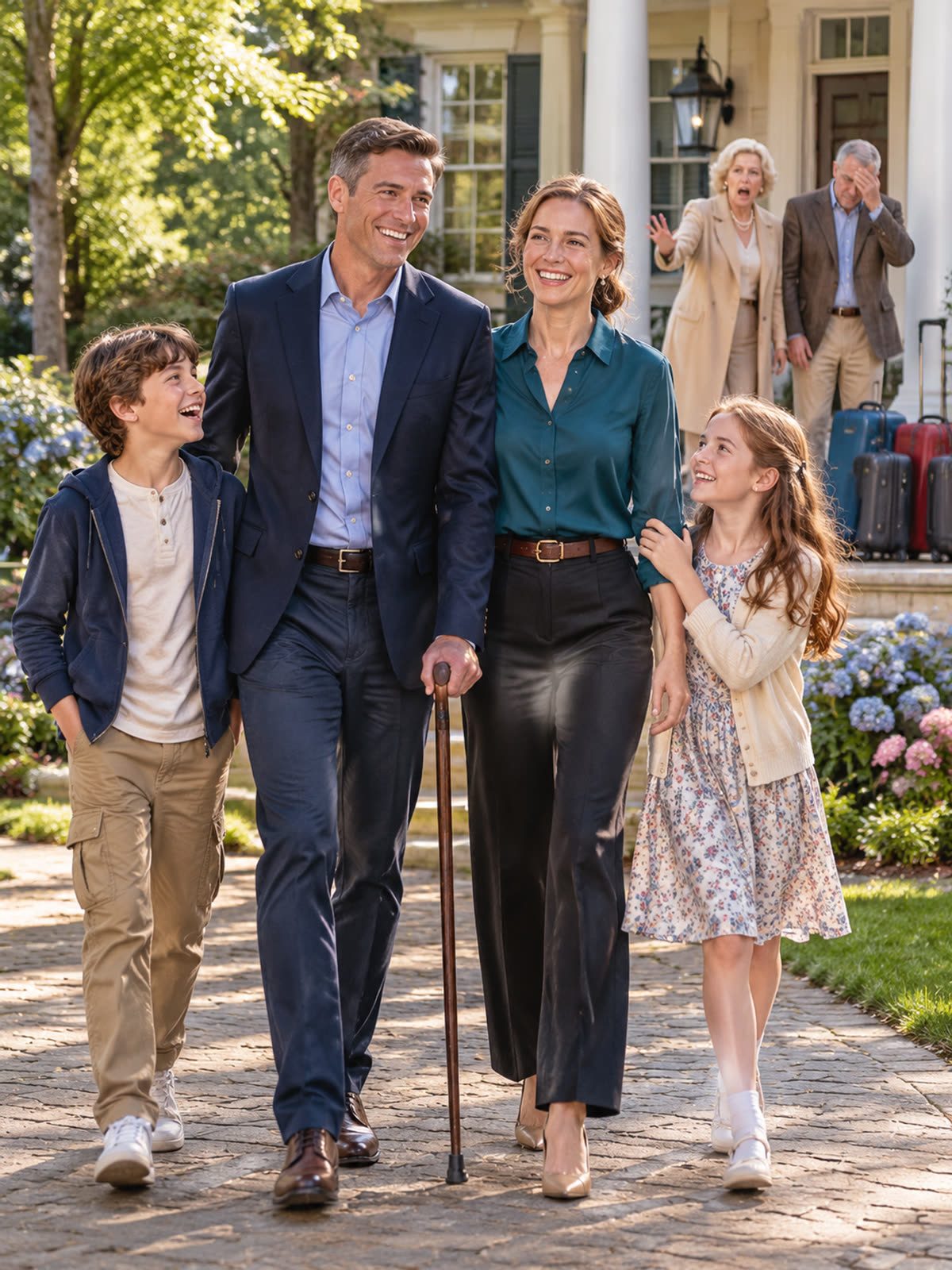
“We’re your parents, sweetheart. You have more than enough money now, so it’s only fair that we share in your success.” My mother delivered those words from the porch of our beautiful North Carolina home. Three large suitcases stood beside her, as though the decision had already been made and all that remained was for me to open the door. Fourteen years earlier, she had warned that marrying a disabled Army veteran with little money would ruin my future. My father had remained beside her without offering a word in my defense. They had stayed away from our wedding, ignored the arrival of our twins, and never bothered to ask whether we were managing.
Now that they knew Owen and I had established a successful business, they had apparently remembered their daughter. “We’ve decided to move in,” my mother announced confidently. “You have plenty of bedrooms, and family should always take care of family.” I glanced from the luggage to my husband, standing behind me with the wooden cane I knew so well. Something about that moment was different from every confrontation I remembered from my younger years. For once, the prospect of disappointing my parents did not frighten me. Before the afternoon ended, my father would also disclose something my mother had been determined to keep hidden.
My name is Natalie Prescott. At forty-two, I am a former Army captain, a business owner, and the mother of ten-year-old twins. My husband, Owen, is the kindest person I have ever known. Our house sits outside Wilmington, North Carolina, surrounded by tall trees and an expansive green lawn. It has five bedrooms, a spacious kitchen, and a backyard where our children spend much of their free time. Anyone looking in from the outside might imagine that our comfortable life had come easily. They would have no way of seeing the sacrifices, relentless effort, or difficult choices behind it. My parents, more than anyone, knew nothing about those years.
That Thursday, I was getting dinner ready when a security-camera alert appeared on my phone. Looking down at the screen, I nearly let the vegetables slip from my hands. Patricia Caldwell, my mother, stood at our entrance in an expensive beige coat. My father, Franklin, waited just behind her, with three suitcases neatly positioned nearby. Fourteen years had passed since I had seen either of them. My mother faced the camera and rang again. “Natalie, we know you’re home. Open the door, sweetheart.” Her tone was almost cheerful. I recognized it immediately, though. It belonged to the same woman who had once assured me I would regret choosing Owen.
I had grown up in a comfortable neighborhood outside Charlotte, in a household where appearances carried enormous weight. My father worked in banking. My mother filled much of her time with charitable events, social occasions, and the careful protection of our family’s reputation. The house remained spotless, my clothing was selected with care, and my grades were watched closely. Even decisions that seemed personal somehow became reflections on my parents. When I earned my place as an Army officer, they were delighted. “This is my daughter, Natalie. She’s an officer in the United States Army.” My mother loved that introduction. Her pride, however, seemed strongest whenever something I accomplished impressed the people around her.
I was twenty-eight and stationed at Fort Liberty, still called Fort Bragg at the time, when Owen entered my life. He was thirty-one and had recently retired from military service following a serious injury during an overseas deployment. Several operations on his left leg had left him walking with a cane. Changes in the weather could make some days especially difficult, but he never treated that injury as the sum of who he was. We first met at a backyard barbecue arranged by a mutual friend. While other guests complained about hamburgers that had spent too long on the grill, Owen made a joke that sent laughter around the table.
Later that day, I saw him helping a teenage boy work on a bicycle. He was patient and considerate, without making any effort to draw attention to himself. That absence of performance was part of what attracted me. As we spent more time together, I realized how easily he could make an ordinary day feel important. There was nothing impressive about his financial circumstances. His pickup was old, and the little house he rented needed work. But he paid attention when I talked, remembered details other people overlooked, and extended kindness to strangers. With him, I never felt that I had to polish myself into someone more acceptable before I could be loved.
One evening on his back porch, Owen took a small ring from his pocket. “Natalie, I can’t promise you an easy life,” he said softly. “But I can promise that whatever happens, you’ll never have to face it alone.” Tears were already running down my face before he finished. “Yes, Owen. Of course I’ll marry you.” Few moments in my life have held that much happiness. What he offered was not an impressive promise designed to sound reassuring. It was the same steady partnership he had already begun showing me. Unfortunately, the qualities that mattered most to me were not the ones my parents were prepared to value.
A few weeks later, I brought him to my parents’ home. My mother watched him approach the front steps, allowing her gaze to settle on his cane. During dinner, her questions kept returning to his income, his work, and the limitations caused by his injury. He remained polite through all of them. Asked how he planned to earn a living, he described the small logistics consulting company he hoped to develop. “I’m hoping to use my military experience to help companies improve their transportation systems,” he said. My mother lifted an eyebrow. “Hoping? That doesn’t sound particularly secure.” I answered at once. “He’s working hard, Mom. Everyone has to start somewhere.”
Her response was a smile without warmth. After dinner, she drew me aside. “Natalie, you have worked too hard to settle for this kind of life.” I stared at her, unable to mistake what she meant but unwilling to let it pass unchallenged. “What kind of life?” She answered, “A life where you’re responsible for supporting a man who may never be able to provide what you deserve.” Heat rushed into my face. “Owen isn’t asking me to support him. We’re building a future together.” My mother shook her head. “Love is wonderful, darling, but it doesn’t pay the bills.” To her, the person I loved had become a calculation, and the life we wanted together was already being dismissed.
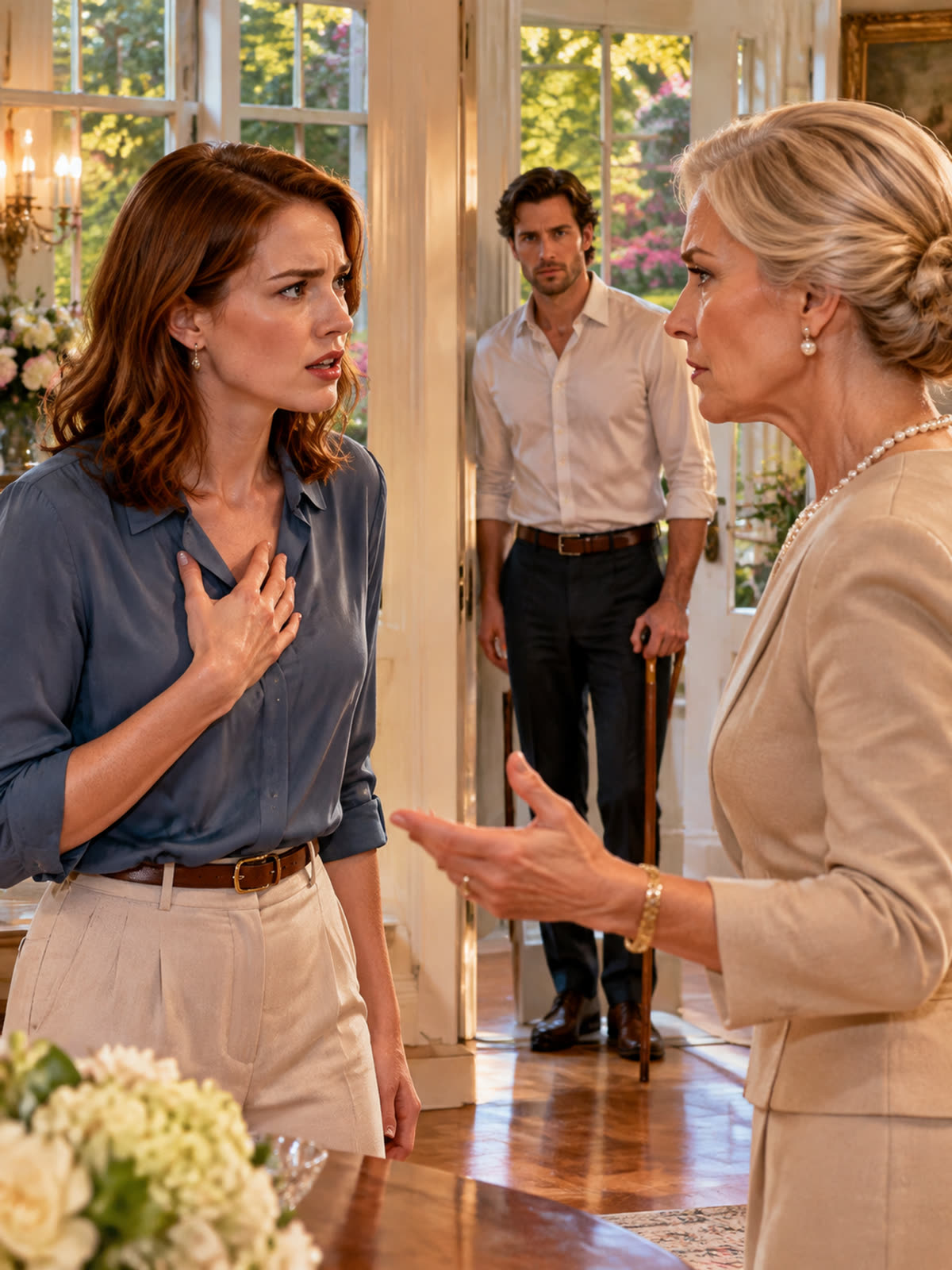
When we returned a week later to tell them about our engagement, whatever restraint remained disappeared. My mother insisted that marriage to Owen would wreck my future. She described him as a burden and argued that I could choose a man with more money and a more established career. My father sat beside her throughout it all, saying nothing. Eventually, she made her position unmistakable. “If you marry that man, don’t expect us to support your decision.” I looked toward my father, still hoping he might speak for me. Instead, he avoided my eyes. “Then I’ll have to build my life without your approval,” I answered.
I left their house with my hand in Owen’s. Neither of them came after us. Six months later, we were married in a small ceremony surrounded by close friends, without my parents there to witness it. At first, I continued trying to leave a path open between us. I sent pictures and occasional messages, sharing news about Owen’s consulting business, my work, and the apartment where we were beginning our married life. Nothing came back. Their silence did not soften when I offered ordinary details or important milestones. It remained the same, regardless of what I tried to share.
When I learned I was expecting twins, I wrote them a letter. That news seemed too important to leave unspoken, even after the unanswered photographs and messages. The envelope came back unopened. I wanted to believe I could bear their rejection without letting it reach so deeply, but holding that returned letter proved otherwise. Owen found me on our bedroom floor with it still in my hands. He sat beside me. “I’m sorry, sweetheart,” he whispered. “I don’t understand how they can be so angry that they don’t even want to know their grandchildren.” He put his arms around me. “Our children will never have to wonder whether they’re loved.”
He honored that promise. Hudson and Sadie arrived healthy and loud, bringing laughter, exhaustion, and sleepless nights into our little home. We did not have much money, and there was nothing effortless about those early years. Owen spent long hours trying to establish the business while I managed contracts, schedules, and relationships with customers. Some months, we worried about how to cover every bill. His leg sometimes hurt badly enough that he had to stop and rest, but he kept finding ways to contribute. The work did not become easy simply because we believed in what we were building.
We made mistakes. Clients left. More than once, we had to gather ourselves and begin again. Yet neither of us stopped trusting the other, even when the future looked uncertain. The life my mother had warned me against was demanding, but it was not the empty, one-sided arrangement she had imagined. We were carrying its responsibilities together. Owen’s injury affected parts of our daily life without determining the worth of his contribution. My work mattered beside his. Neither of us was a burden the other had reluctantly agreed to carry. We were partners trying to create something that could support our family.
Slowly, that effort began to produce results. One contract opened the way to another. We were able to hire employees, reach into neighboring states, and secure partnerships with several large transportation companies. Growth came gradually rather than in a single dramatic turn. By our tenth wedding anniversary, we had accomplished more than either of us had once thought possible. We bought the house we had dreamed about, with room for our children and a life that no longer revolved around worrying whether every bill could be paid. The comfort was real, but so was my memory of everything that had come before it.
I never forgot how it felt to have almost nothing, or who had stayed close through those years. The house did not erase the small rented home, the uncertain beginnings, or the envelope my parents had refused to open. Success changed our circumstances, not the history behind them. Owen had remained beside me when there was no wealth for anyone to admire. Our children had grown up knowing that love was present, even when money was scarce. My parents had chosen not to know any of that. They had missed both the struggle and the family that had taken shape inside it.
Fourteen years after they withdrew from my life, a regional business magazine ran a feature about our company. It included photographs of Owen and me, described the growth of our work, and estimated the business’s value in the millions. I felt proud seeing what we had accomplished acknowledged that way. The article represented years of persistence compressed into something other people could read in a few minutes. It could show the successful company and the couple behind it, but not every difficult decision that had carried us there. I had no reason to imagine it would matter personally to the two people who had ignored everything else.
For so long, I had shared pieces of my life with parents who would not answer. The photographs, the updates, and the news of their grandchildren had all failed to bring them closer. This time, I had not sent them anything at all. The article existed because of the business Owen and I had built, not because I was making another attempt to earn their attention. I was pleased with our accomplishment and unaware that the public estimate of its worth would reach a place my private words never had.
Three weeks after the magazine appeared, my phone rang. The number was almost unfamiliar to me. When I answered, the voice on the other end closed fourteen years of distance in just a few words. “Natalie? It’s Mom.” For several seconds, I could not speak. After everything she had refused to hear about our lives, my mother had finally decided there was a reason to call.
PART 2 — The Truth Behind the Suitcases
My mother sounded remarkably casual, as if the silence between us had been an ordinary pause rather than fourteen years. “Your father and I saw that wonderful article. You’ve certainly done well for yourself.” There was no apology attached to the compliment. She did not ask about Hudson or Sadie. She offered no recognition of our wedding, the unanswered messages, or the letter that had come back unopened. The conversation moved toward what she wanted without stopping at anything she had missed. She asked whether we could meet, and I found myself confronting the possibility I had once imagined so often: perhaps enough time had passed for something to change.
Reluctantly, I agreed to meet them for coffee the following week. It was a limited beginning, not an invitation to step back into every part of my life. Still, I allowed myself to consider that the years might have altered their perspective. I had spent so long without hearing from them that even an imperfect approach carried weight. What I did not expect was for them to arrive at our house four days before the meeting, bringing their belongings. The woman on the security screen was not waiting at a café to begin a difficult conversation. She was standing outside my home with luggage.
I opened the main door but left the security screen locked between us. “Mom? Dad? What are you doing here?” My mother greeted me with a bright smile. “Surprise! Aren’t you going to invite us inside?” I looked again at the three suitcases. Their presence made it impossible to treat this as a spontaneous visit. “Why did you bring luggage?” She adjusted her coat before answering, apparently comfortable with the explanation she had prepared. “Well, your father and I have been reconsidering our living arrangements. It makes no sense for us to keep paying rent when you have this enormous house.”
For a moment, I could only stare at her. “What are you saying?” My mother responded as though she were clarifying something simple. “We’re moving in, Natalie. You have five bedrooms. Surely you can spare one for your parents.” I wondered whether I had somehow misunderstood, although there was nothing uncertain in what she had said. “You haven’t visited me in fourteen years, and now you’re expecting to live here?” She let out an impatient sigh. “Don’t be dramatic. Families have disagreements. It’s time to move forward.” She reduced years of deliberate absence to a disagreement we should simply set aside.
“You didn’t even acknowledge the birth of my children.” My mother dismissed that too. “That was years ago.” I could not allow her to make their entire childhood disappear inside those few words. “They’re ten years old, Mom. You’ve never met them.” Her face tightened rather than softened. “We raised you. We paid for your education and gave you opportunities. Surely you understand that children have responsibilities toward their parents.” There it was again: the familiar suggestion that everything they had given me came with obligations they alone could define. My marriage and my children had not mattered enough to bring them back. My available bedrooms apparently did.
I recognized the pressure immediately, but recognizing it no longer meant surrendering to it. The young woman who had waited for approval at their dinner table was not the woman standing at this door. “You don’t get to disappear from my life and return when you think I have something you want.” My mother moved closer. “We deserve a share of what you’ve built. That’s what family means.” Her certainty was almost as painful as the demand itself. She spoke of what we owed her without acknowledging what she had refused us. Then I heard Owen’s cane behind me, a familiar sound approaching through the house.
He came toward the doorway slowly. My mother looked from me to him, and the smile she had brought to the porch faded. “Well, I see some things haven’t changed,” she remarked, glancing at his cane. Even after fourteen years, she reached for the same judgment. Owen did not answer her unkindness with anger. “Hello, Patricia. Franklin.” My father responded with an awkward nod. My mother folded her arms, turning the situation into something she expected Owen to understand and accept. “I assume Natalie has explained the situation. We’re simply asking for a reasonable arrangement.”
Owen looked at the luggage waiting outside. “Moving into someone’s home without an invitation isn’t an arrangement.” My mother frowned. “This is my daughter’s house.” It was a familiar kind of dismissal, treating him as though he remained separate from the life we had spent fourteen years building together. “It’s our family’s home,” Owen replied. “And our children deserve to feel comfortable and safe here.” His words brought the conversation back to what my mother kept overlooking. This was not an empty property made available by our good fortune. It was the place where our children lived and where our family belonged.
My mother gave a dismissive laugh. “You always did have a talent for making yourself important.” I began to answer, but Owen rested a gentle hand on my shoulder. He did not need to raise his voice to make himself heard. “Fourteen years ago, you decided I wasn’t good enough for your daughter because I walked with a cane and didn’t have much money,” he said quietly. My mother turned her eyes away. “I was concerned about her future.” It was the same explanation she had offered when I was young, the same claim that rejection could be excused if she described it as concern.
“You were concerned about appearances,” he answered. “Natalie and I built our life together. She worked just as hard as I did, and neither of us owes you access to our home or our savings.” His voice stayed even. “You don’t have to respect me. But you will respect my wife and our children.” Standing beside him, I heard no attempt to punish them or use our success to humiliate them. He was simply refusing to let their old contempt become the rule inside our home. My mother started to argue. Before she could get the words out, my father stepped forward. “Patricia, stop. We need to tell her the truth.”
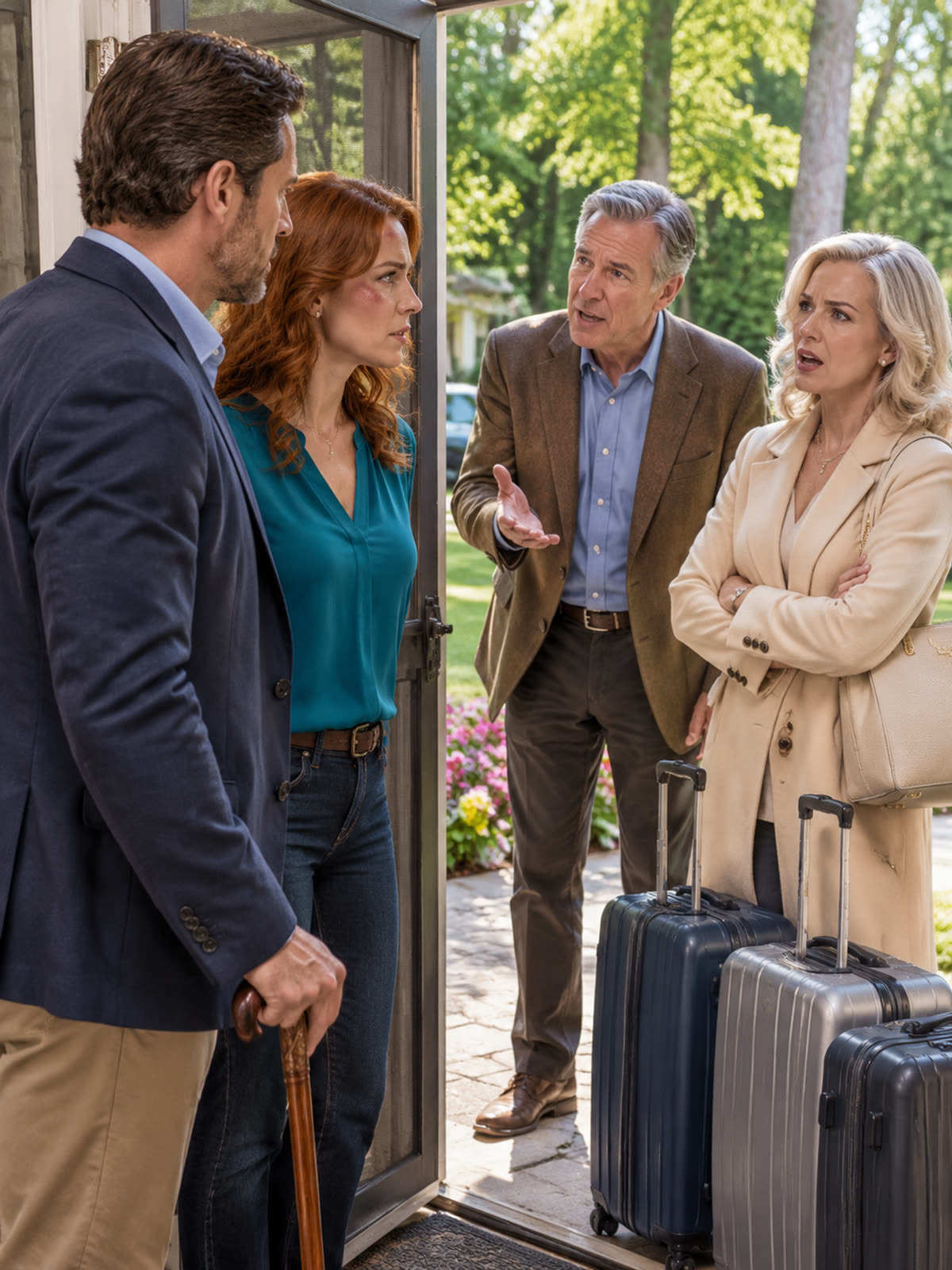
The change in her expression was immediate. Until then, she had behaved as if the situation could be settled through confidence and persistence. Now her attention snapped toward him. “Franklin, don’t you dare.” He looked straight at her rather than retreating into the silence I remembered. “She deserves to know why we’re really here.” The exchange shifted everything. My mother had arrived with a demand she presented as reasonable and a story about reconsidering their living arrangements. My father was making it clear that neither explanation had told us what we needed to know.
He turned toward me. I could see how much older he looked, the fatigue around his eyes and the trembling in his hands. “Natalie, we didn’t leave our rental because we wanted a change. We left because we couldn’t afford it anymore.” My mother lowered her gaze to the floor. He went on. “I made a terrible investment. Someone convinced me to put most of our retirement savings into a real estate development. The promised returns were impressive, and I believed them.” He swallowed before saying what came next. “It turned out to be a fraudulent investment scheme. We lost almost everything.”
My stomach tightened. Whatever I thought of their behavior, I had not expected that confession. “What about your house in Charlotte?” He answered without trying to make the circumstances sound better. “We sold it years ago. We were renting after that, and now we can’t keep up with the payments.” He looked down at the suitcases. “Your mother thought that if we came here with our belongings, you’d feel obligated to let us stay.” I turned toward her. “Is that true?” She gave me no answer. For once, the woman who always seemed to have an argument ready could not find words to defend what she had done.
My father continued in a quiet voice. “We saw the article about your business. We knew you were doing well, and we convinced ourselves that you would help us.” I drew a slow breath, trying to absorb the difference between the reunion I might once have wanted and the one taking place on my porch. Their circumstances were genuinely difficult. Their approach had also been deliberate. The luggage was not an innocent misunderstanding about the length of a visit. It had been brought to make refusal harder, to turn their need into an obligation before I had agreed to anything at all.
For years, I had wondered whether my parents would return because they missed me. I had imagined some recognition of what our separation had cost, perhaps a desire to know the grandchildren they had never met. Now I knew what had brought them to our door. They needed something, and the magazine had shown them that we might be able to provide it. That realization hurt in a different way from their absence. Their silence had left room for questions. Their arrival supplied an answer I had never wanted. They had come looking for access to the life they had refused to share.
Owen stayed beside me without speaking. He understood that the decision belonged to me, and he did not try to make it on my behalf. I looked at my parents and tried to distinguish their hardship from the choices they had made. Losing their savings was terrible. Arriving without permission and expecting to move into our home was something else. Compassion for one did not require agreement with the other. I could acknowledge their fear without allowing it to sweep aside my husband, our children, or everything we had worked to protect.
“Dad, I’m sorry you lost your savings. I really am.” Tears rose in his eyes. “Thank you, Natalie.” I meant what I had said. His loss did not become less painful simply because our relationship was damaged, and I did not need to pretend otherwise in order to hold my ground. But sympathy was not the answer my mother had come expecting, and I knew the next words would matter more than any explanation that followed them. “But you cannot move into our house.” My mother looked up immediately, all the quiet that had followed his confession vanishing.
“You’re turning away your own parents?” Her question tried to turn the entire afternoon into a test of my loyalty. “I’m setting a boundary,” I replied. “There’s a difference.” She shook her head. “After everything we did for you?” I had heard versions of that argument before, but this time I would not let it erase the rest of our history. The good things my parents had provided were real. So were the choices they had made afterward. Gratitude did not require me to act as though the last fourteen years had never happened.
“You raised me, and I’m grateful for the good things you provided. But that doesn’t mean you can demand a place in my home after fourteen years of treating my husband and children as though they didn’t matter.” My father lowered his head. I was not asking them to agree that every memory of my childhood had been painful. I was asking them to face the damage caused by their refusal to accept the family I chose. Our success had not made that damage irrelevant, and their financial crisis did not give them the right to decide what happened inside our house.
The suitcases still stood outside, waiting for an answer different from the one I had given. My father had finally told the truth, and my mother had finally heard a refusal she could not dismiss as youthful defiance. Yet saying they could not live with us was only part of the decision. I knew what help I was prepared to offer, and just as importantly, where that help would end. I began to explain, without knowing whether they would accept the boundary—or whether my mother would turn even this last offer into another reason to walk away.
PART 3 — What Money Could Never Give Us
“I’ll pay for one month at an extended-stay hotel. I’ll also help you find a financial counselor who can explain your options and help you make a realistic plan.” It was help I could offer without handing over control of our home or pretending we could repair their finances by abandoning every limit. My mother looked offended rather than relieved. “You expect us to accept charity?” I kept my answer practical. “I’m offering practical help, Mom. I’m not giving you access to our accounts, and I’m not paying off your debts.” I wanted there to be no uncertainty about what I meant.
She turned toward Owen, apparently hoping he might convince me to change my mind. Instead, he nodded in agreement. “Natalie’s being generous,” he said. “I hope you’ll recognize that.” My father reached for the nearest suitcase. “We accept,” he said quietly. Then he faced Owen. “I owe you an apology. I should have defended you all those years ago. More importantly, I should have defended my daughter.” Owen looked at him for a moment before replying. “Thank you for saying that, Franklin.” My father turned back to me. “I should have walked you down the aisle.” Tears filled my eyes. My decision remained unchanged.
They took their luggage back to the car. For once, my mother left without delivering a final argument. Once they had driven away, I shut the door and leaned against it while Owen put his arms around me. “Are you okay?” I nodded, then shook my head. “I think so. I just never imagined it would happen this way.” He kissed my forehead. “You handled it with more kindness than they expected.” His reassurance did not erase the sadness of the afternoon, but I did not have to carry that sadness by myself. The promise he had made on his porch so many years earlier was still part of our life.
Hudson and Sadie appeared in the hallway a moment later. “Mom, who were those people?” Sadie asked. I knelt beside them. “They were my parents, sweetheart.” Hudson’s expression showed his confusion. “The grandparents we’ve never met?” “Yes.” Sadie placed her hand in mine. “Are they going to live with us?” I gave her a gentle smile. “No, honey. This is our home, and nothing is going to change that.” Whatever complicated feelings the encounter had left in me, the children did not need to feel that the security of their home depended on an argument between adults.
One week later, a handwritten letter arrived from my father. In it, he apologized for letting fear and pride guide his choices. He admitted that, for years, he had protected appearances instead of protecting his relationship with me. His words did not try to make my mother solely responsible or describe his silence as harmless. He had also found part-time work at a hardware store and was meeting with a financial counselor. Near the end, he wrote that he did not expect me to forgive him, but hoped I might someday allow him to know his grandchildren.
I read the letter three times. For the first time, his apology felt genuine. It did not make the missed wedding or the years without contact disappear, and it could not give back the childhood moments he had never witnessed. Still, there was a difference between that letter and the explanation offered on my doorstep. He was acknowledging his own decisions and beginning to take practical responsibility for his circumstances. I could see that difference without deciding that everything was healed. Sincerity mattered, but it was a beginning rather than a demand that I immediately restore the relationship.
My mother needed longer. Several months went by before an email arrived from her. It was not especially graceful, but it contained more honesty than I was used to hearing from her. She admitted that she had judged Owen unfairly and that anxiety about losing social standing had shaped the way she treated us. She also acknowledged the central truth she had resisted for so long: she had missed fourteen years of her daughter’s life because she could not accept a choice that had never been hers to make.
I did not answer immediately. Forgiveness deserved careful thought, particularly because any renewed relationship would involve my children. It was one thing for me to consider allowing my parents closer. It was another to decide how that closeness should look for Hudson and Sadie. Owen and I eventually agreed to meet them at a restaurant shortly before Christmas. We chose a quiet place with a private dining area. The meeting would not erase the past or settle every question between us. It would simply allow us to sit together and see whether a different kind of beginning was possible.
My parents arrived in simple clothes, looking nervous. For the first time, they did not appear focused on making an impression. I introduced them to Hudson and Sadie. Watching my children meet the grandparents who had been absent for their entire lives brought the missing years into sharp focus. There was no way to compress those years into an introduction or make the situation feel entirely natural. Still, the meeting was happening. My parents were there, not asking for a bedroom or claiming a share of our business, but facing the family they had spent so long refusing to know.
My father became emotional when Hudson held out his hand. “It’s nice to meet you, Grandpa.” He smiled through his tears. “It’s wonderful to meet you too, son.” Sadie politely asked my mother whether she liked chocolate cake. My mother gave a soft laugh. “I certainly do.” The children began talking about school, favorite books, and the Christmas decorations they had helped Owen put up at home. I watched my parents listen. These were ordinary details, the kind I had once tried to send them without receiving an answer. Now they were hearing those details from the children themselves.
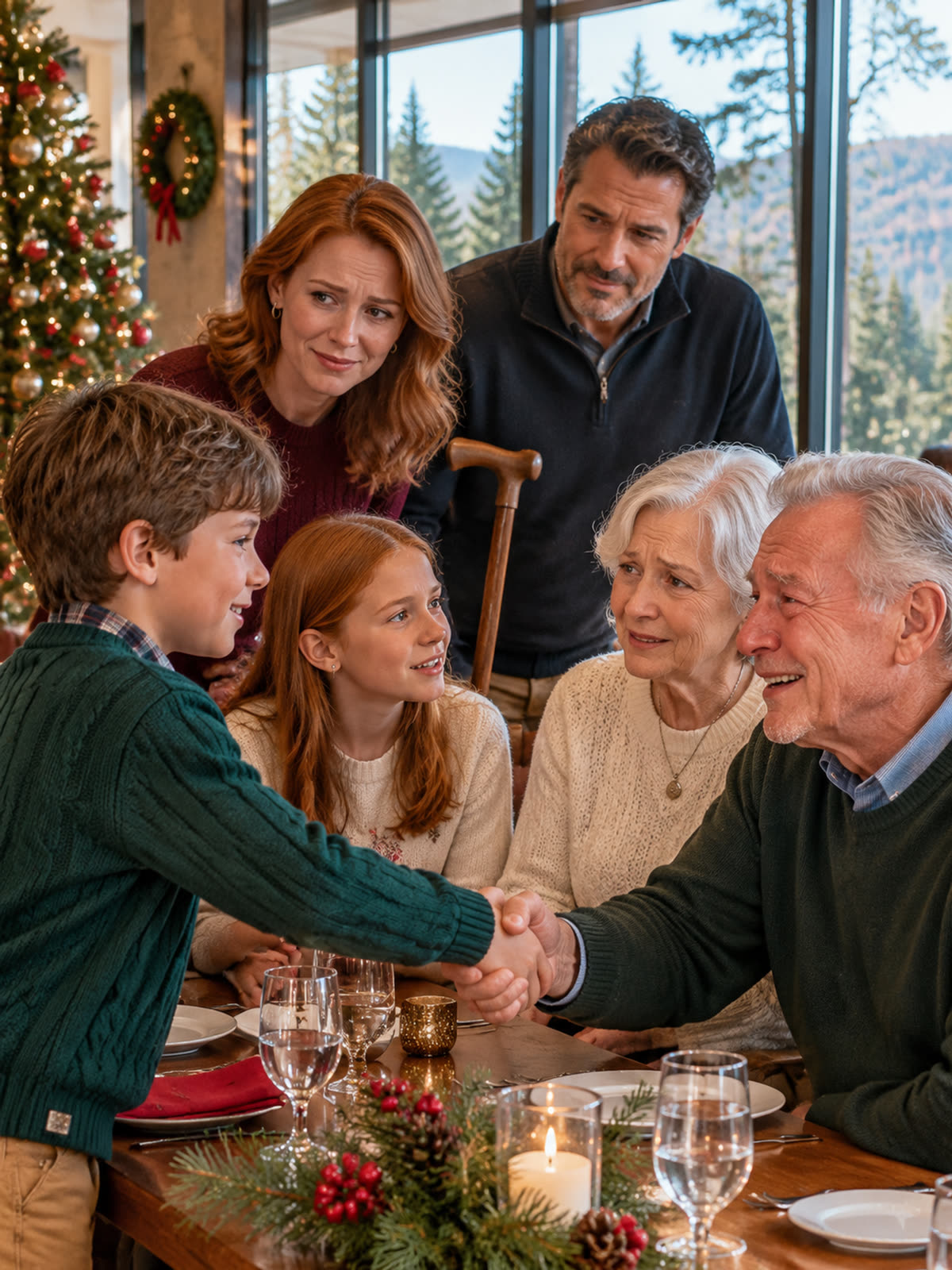
There were uncomfortable moments. Fourteen years could not be undone by sitting through one meal, no matter how much everyone wanted the meeting to go well. Yet something was different. When Owen stood to help my mother with her chair, her eyes moved briefly to his cane. I remembered the look she had given him so many years earlier and the judgment behind it. Then she looked up at him. “Thank you, Owen.” “You’re welcome, Patricia.” The exchange was small, but its simplicity made it meaningful. She had accepted his kindness without turning his injury into a reason to diminish him.
My parents never moved into our home. We did not take over their debts, and we did not behave as if the painful years had never existed. Instead, we started rebuilding carefully, allowing the relationship to develop within clear limits and realistic expectations. My father kept working and gradually became involved in the children’s lives. My mother learned that a visit required an invitation and that being older did not entitle her to demand respect while withholding it from everyone else. Reconnection did not mean returning to the old arrangement with kinder words placed over it.
There were still difficult conversations and disagreements. Healing did not remove every uncomfortable moment or make our history easy to discuss. We were learning to communicate without letting the past dictate every exchange, while also refusing to deny what the past had been. That balance required patience. An apology mattered, but so did what followed it. Our boundaries were not punishments waiting to be withdrawn once my parents said the right thing. They were part of the healthier relationship we were trying to build, and part of protecting the family Owen and I had already created.
One evening, after the twins were in bed, Owen and I sat on our back porch. Garden lights shone softly against the trees. He placed his cane beside his chair and reached for my hand. “Do you ever wonder what your life would have been like if you’d listened to your parents?” I considered the question, then looked through the kitchen window at the photographs of our children, the family calendar filled with colorful handwriting, and the home we had made together. “Sometimes,” I admitted. “But I know I wouldn’t trade this life for anything.”
He smiled. “Even with all the difficult years?” I tightened my hand around his. “Especially because of those years. They taught me what really matters.” For a long time, I had believed that becoming successful might finally make my parents proud. Sitting there, with the familiar details of our family life visible through the window, I understood how much I had once allowed their approval to determine what success meant. The business mattered, and I was proud of it. But it had not created the value of the life I shared with Owen and our children.
I had not become successful on the day our company reached its first million dollars. Something more important had happened when I stopped judging my worth by my parents’ expectations. The man they had dismissed as a burden had become my closest partner. The grandchildren they had ignored were at the center of our world. Our house was not simply evidence that we could afford beautiful things. It was where our family could feel loved, respected, and safe. My mother had arrived believing she deserved a place inside it because of what it was worth. Its real value was something money could not purchase.
Family ought to offer acceptance and support, not make affection depend on whether someone fulfills another person’s ambitions. Guidance can come from love, but it becomes something different when parents refuse their children the freedom to make personal choices. The life I chose did not match the one my mother imagined for me. That did not make it a lesser life. Nor could Owen’s character be measured by his injury, the money he had when we met, or the uncertainty surrounding his first business plans. His patience, determination, and kindness had always revealed far more about the husband he would become.
The person who stays beside you during the hardest years may give you a deeper happiness than someone who offers financial security without understanding. Wealth can ease practical burdens, but it cannot substitute for peace inside a relationship. The size of a home, the balance of an account, and public recognition tell only part of a family’s story. None of them can establish whether the people living together feel valued. Our hardest years had taught me to recognize the difference between a life that looked impressive from the outside and one that felt secure and loving from within.
Forgiveness also meant something different from forgetting. I could consider reconciliation without surrendering boundaries or restoring trust faster than it could reasonably grow. Helping my parents through a financial crisis did not require sacrificing our family’s stability or assuming responsibility for decisions we had not made. Compassion and limits could exist together. Saying no to their demand for our home did not prevent me from offering useful help. In the same way, acknowledging sincere apologies did not require me to pretend that fourteen years of absence could be repaired without patience, consistent actions, and respect for the people who had been hurt.
In the end, the richest families are not necessarily the ones with the grandest possessions. They are the ones whose members know they are protected, valued, and loved for who they are. Owen and I had built that kind of home long before a magazine placed a number beside our company’s name. My parents had finally begun to understand why they could not simply claim a place in it. Whether our renewed relationship would become everything we hoped still depended on what came after the apologies—because the next test would not be what they promised, but how they chose to act.
